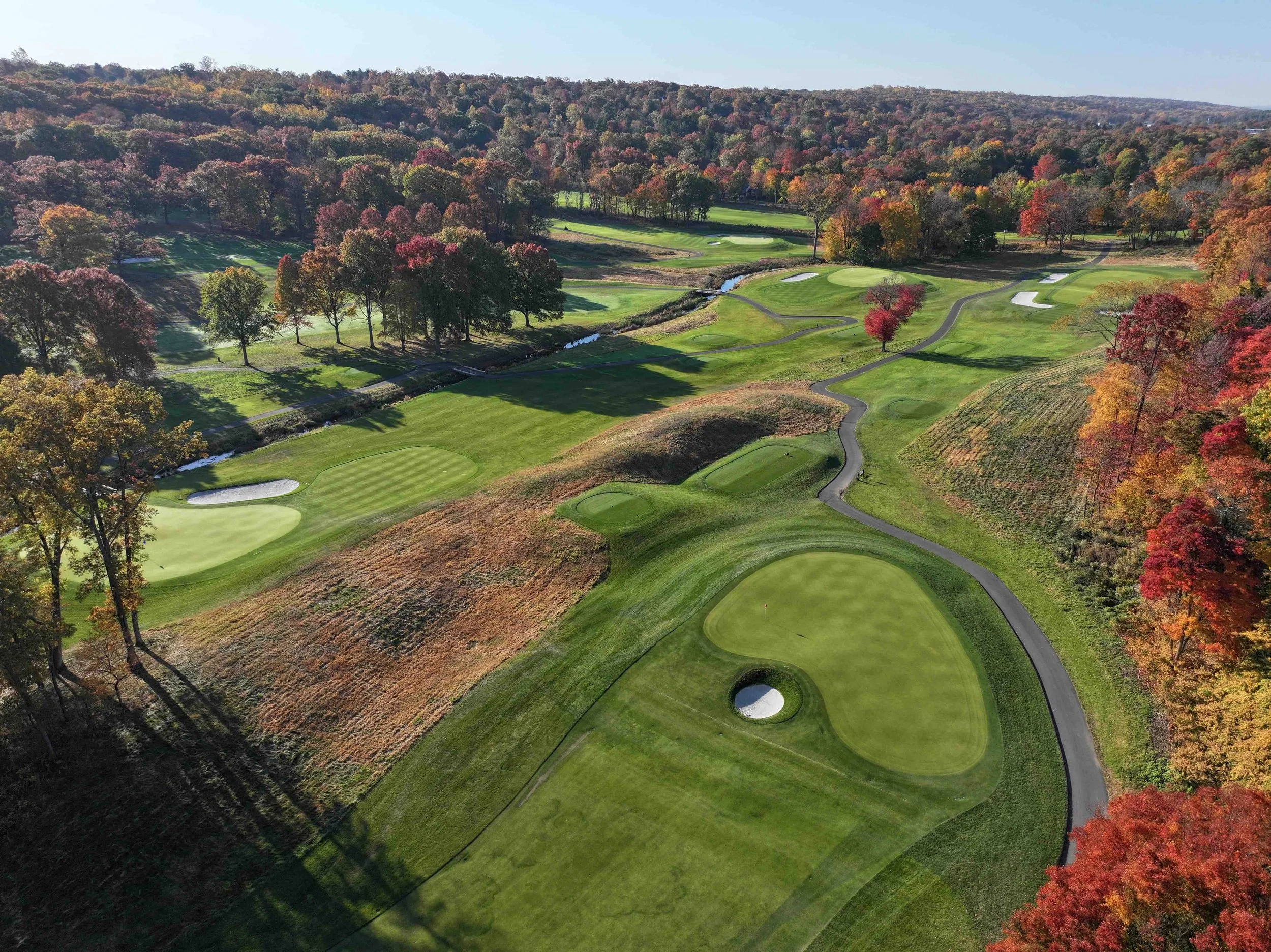
GOLF COURSE REVIEW - FRANCIS BYRNE GOLF COURSE
Course Architects: Seth Raynor/Charles H. Banks (1928), Stephen Kay (Restoration, 2023)
Year Opened: 1928
Location: West Orange, New Jersey
Slope: 137. Rating: 73.5
Par: 70
Yardage: 6,971
Hole-by-Hole: 1- Par 4 418 Yds 10 - Par 4 411 Yds
2 - Par 3 250 Yds 11 - Par 4 409 Yds
3 - Par 4 412 Yds 12 - Par 4 449 Yds
4 - Par 4 348 Yds 13 - Par 4 419 Yds
5 - Par 3 178 Yds 14 - Par 3 203 Yds
6 - Par 4 440 Yds 15 - Par 5 503 Yds
7 - Par 4 362 Yds 16 - Par 4 442 Yds
8 - Par 4 439 Yds 17 - Par 3 218 Yds
9 - Par 4 472 Yds 18 - Par 5 598 Yds
Par 34 3,319 Yds Par 36 3,652 Yds
Events Held: New Jersey Junior Girls Championship (2026).
Awards Won: One of America’s best courses you can play for $100 or less (Golf Magazine),
Ranked 2nd by GolfPass - Best Public Courses in NJ,
Ranked 14th by Golfweek - Best Public Course in NJ (2026).
Website: https://essexcountyparks.org/golf/francis-byrne-golf-course
HISTORY: The Francis A. Byrne Golf Course dates back to 1928, when famed architects Seth Raynor and Charles Banks crafted this layout. Raynor, who passed away prior to the completion of the course in ‘26, along with Banks, created some amazing courses in the United States.
Some of their best work includes Fishers Island Club (NY), Camargo Club (OH), Fox Chapel Golf Club (PA) and the Course at Yale (CT).
Originally an apprentice for C.B. Macdonald, Raynor earned his “bones” in golf course architecture by incorporating many of his mentor’s template of holes that evolved in the United Kingdom.
Banks, who was nicknamed “Steam Shovel” on the other hand, was an English teacher at The Hotchkiss School in Connecticut for many years and met Raynor while he was rebuilding the golf course at Hotchkiss. Banks was so energized by the work Raynor was doing, that he resigned from his teaching position to join Raynor and Macdonald.
Banks, after Raynor’s death, completed many of his works, including the Byrne Golf Course, which at the time was the West Course at Essex County Country Club, the oldest club in New Jersey.
Due to financial issues, ECCC decided to open the course to public play and then moving forward to 1978, sold the course to Essex County for $3 million and renamed it Francis A. Byrne Golf Course. Byrne was a long-time public official in New Jersey, and they named the layout in his honor. Byrne was the father of former New Jersey Governor, Brendan T. Byrne.
To bring the layout up to today’s standards, the county hired golf course architect, Stephen Kay in 2023. Kay has had his hand in designing and restoring over 300 courses around the United States, most notably on the east coast.
One of Kay’s first objective’s was to convert the opening hole from a par five into a par four and the reason will surprise you. “There was some safety problems, as tee shots would slice off to the right, get up over the trees and were hitting a particular house across the street,” said Kay. “So we moved the tee up and tucked it way to the right and we shifted the fairway 15 yards to the left, so players were aiming away from that area,” continued Kay.
In addition, all of the greens were enlarged about 800 to 1,000 square feet and many of the bunkers were fixed due to poor drainage. “Although the course was in good maintenance shape, the tees were unleveled and bunkers held water after storms because they didn’t have drainage,” added Kay.
“So then during the renovation, where we rebuilt the bunkers, added good tee mix and got drainage in the bunkers by putting in capillary concrete so they don’t wash out every time it rains. This way the bunker sand stays clean. That’s why they look so good now,” said Kay.
“On number eight, there were bunkers on either side of the green, but we changed that to really big undulating grass hollows,” added Kay. “We did that because the water in a big rainstorm would wash out the bunkers and create a 100-foot wide and two inches deep of flowing water.”
How good was Kay’s work on the golf course? It is ranked as one of the top-15 public courses in New Jersey, not to mention one of the best courses you can play for under $100 in the Garden State!
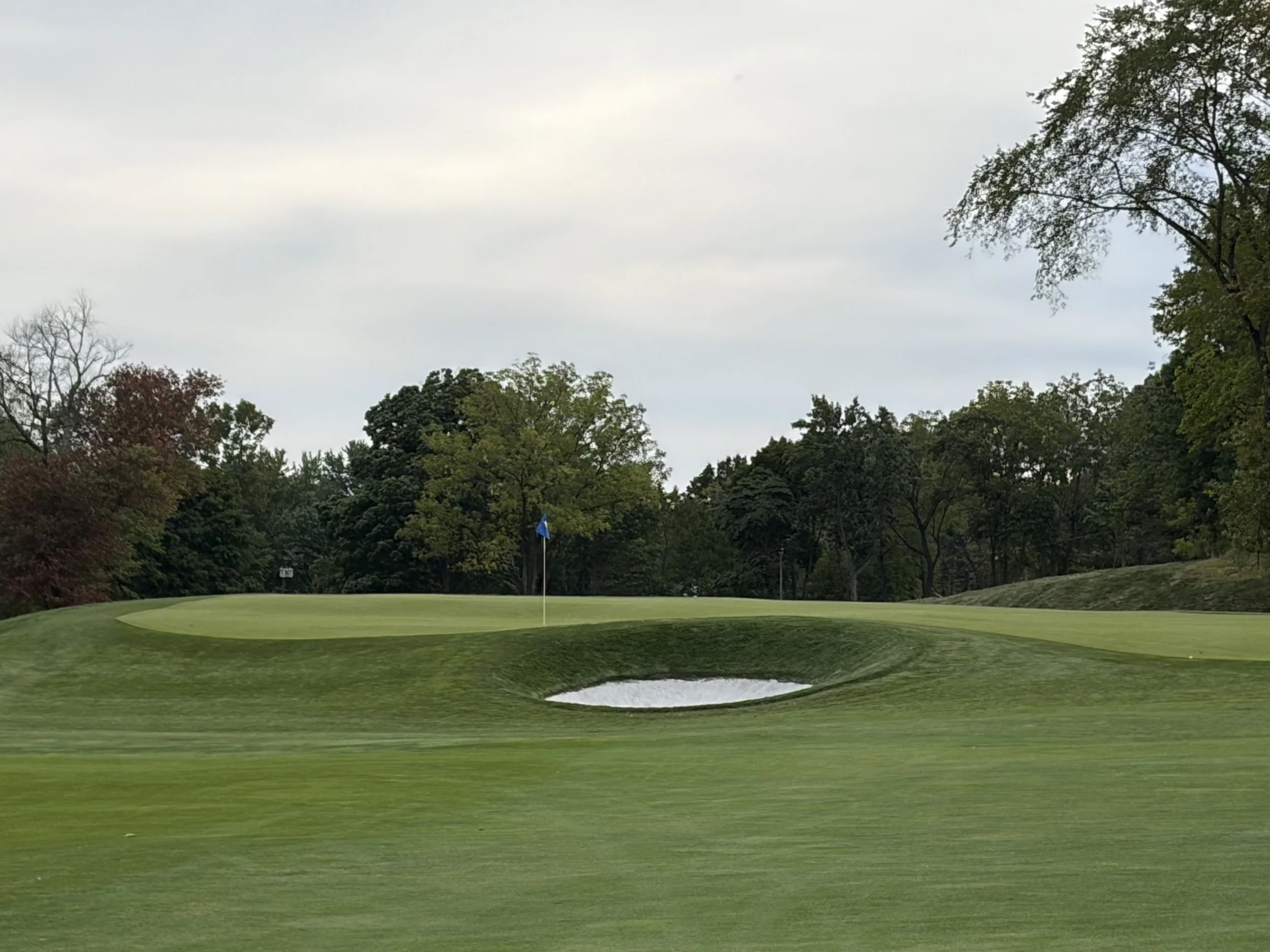
HOLE BY HOLE ANALYSIS: The opening hole is a slight, dogleg right par four, fashioned after the Road Hole at St. Andrews. Out of bounds guards the right and trees down the left. A solid tee ball down the left will leave a short iron approach to a green that’s guarded by a deep pot bunker. The putting surface runs hard from back to front with a pair of false fronts on either side of the bunker. If you thought that the course would ease you into the round, you’re surely mistaken.
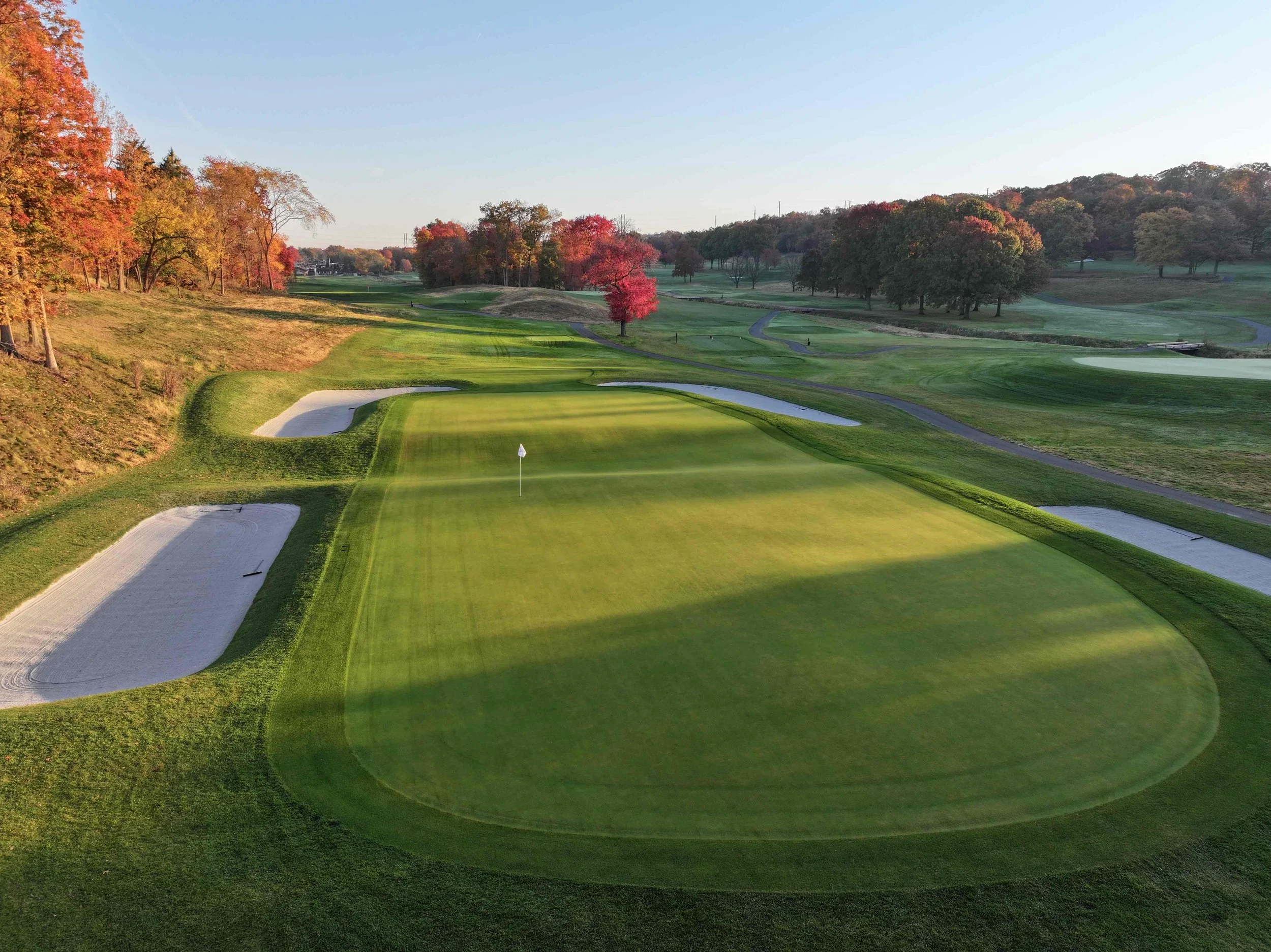
Number two is a massive par three that reaches 250 yards in length and features a classic Biarritz-style green. Two sets of bunkers on either side protect the landing area. You’ll need to be precise with your tee shot, depending upon where the pin is located, as any shot landing in the huge swale in the center of the very long green will make it difficult to two-putt.
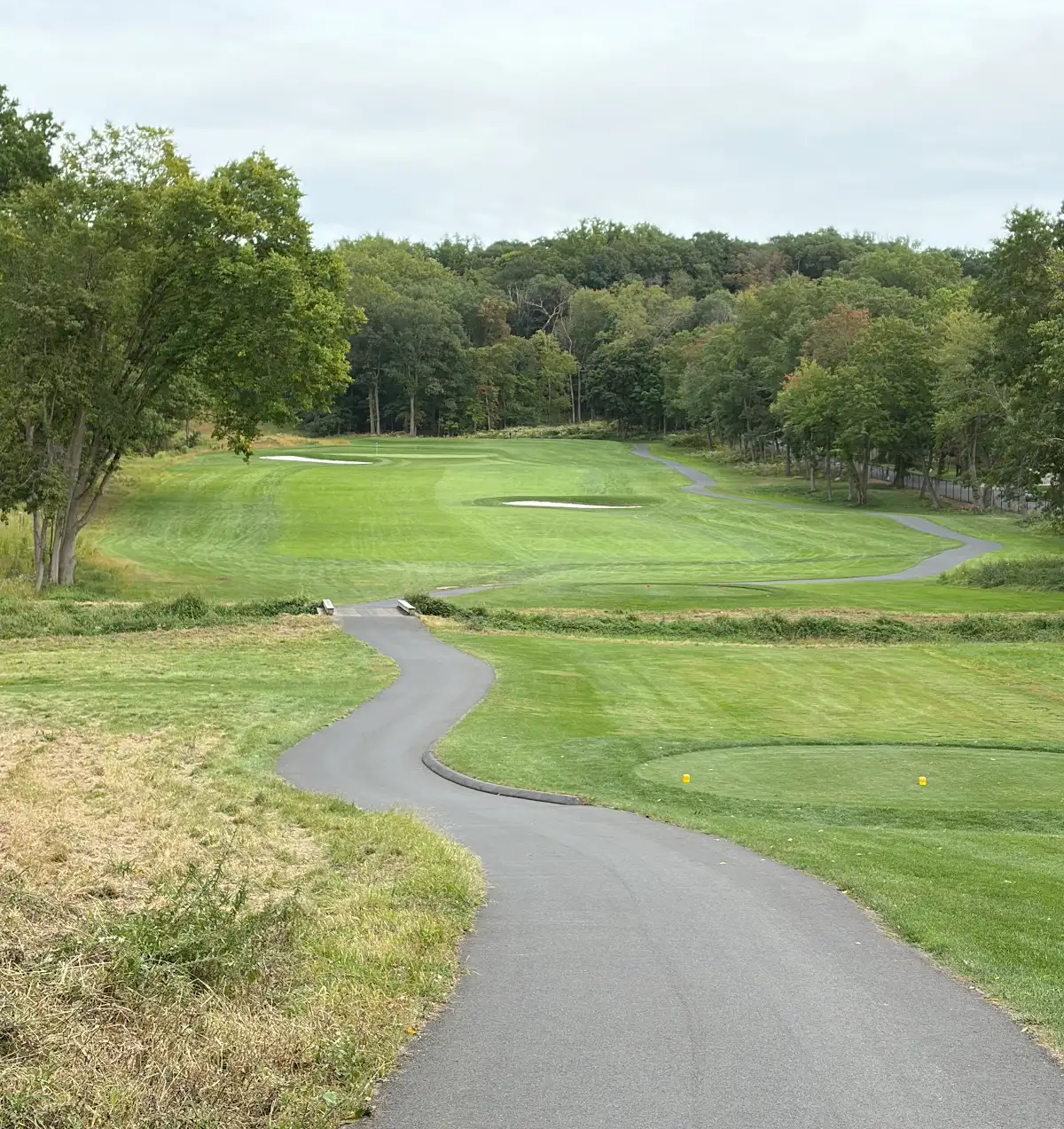
One of 10 par fours stretching over 400 yards, the third is a straight, uphill beauty that boasts a bunker down the right side of the fairway. “That fairway bunker was not there when we came in to do the restoration, but it was on his drawing. So, overall there were bunkers on the course that we put back. However, we did not put the fairway bunker on three exactly where it was, because a lot of his fairway bunkers were only 200 yards off the tee, so we put them at about 250-260 off the tee,” added Kay. Your approach will require an extra club to the green, which is protected on the left by sand. Another slick, back to front surface will be tricky to negotiate.
Moving on to the fourth, this hole doglegs to the left and is uphill from tee to green. The key here is a successful tee shot, favoring the right-center, as any shot missing the landing area will result in thick rough or trees on the left side. Although just 348 yards in length, this hole plays arguably much longer. A pair of traps on either side of the putting surface must be avoided. The green features a ridge down the center and slopes hard from right to left with plenty of movement throughout. “We actually doubled the size of the green, making this surface quite difficult,” said Kay. Stay below the hole if you can.
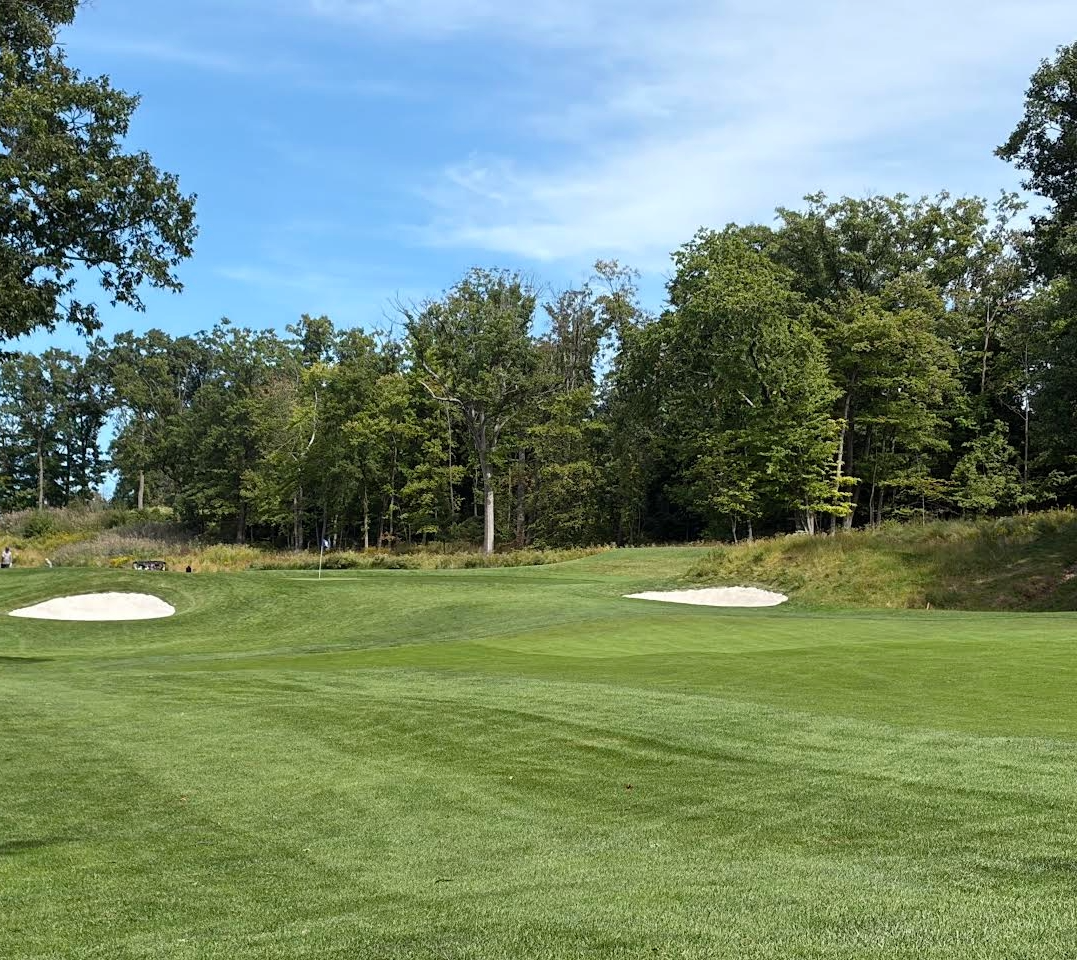
Continuing with the uphill theme, the par-3 fifth is short, but needs an extra stick to reach the putting surface. Just 178 yards from the black markers, this hole features a quartet of sand traps guarding the front. The green slopes hard from back to front, so, as noted before, stay below the hole.
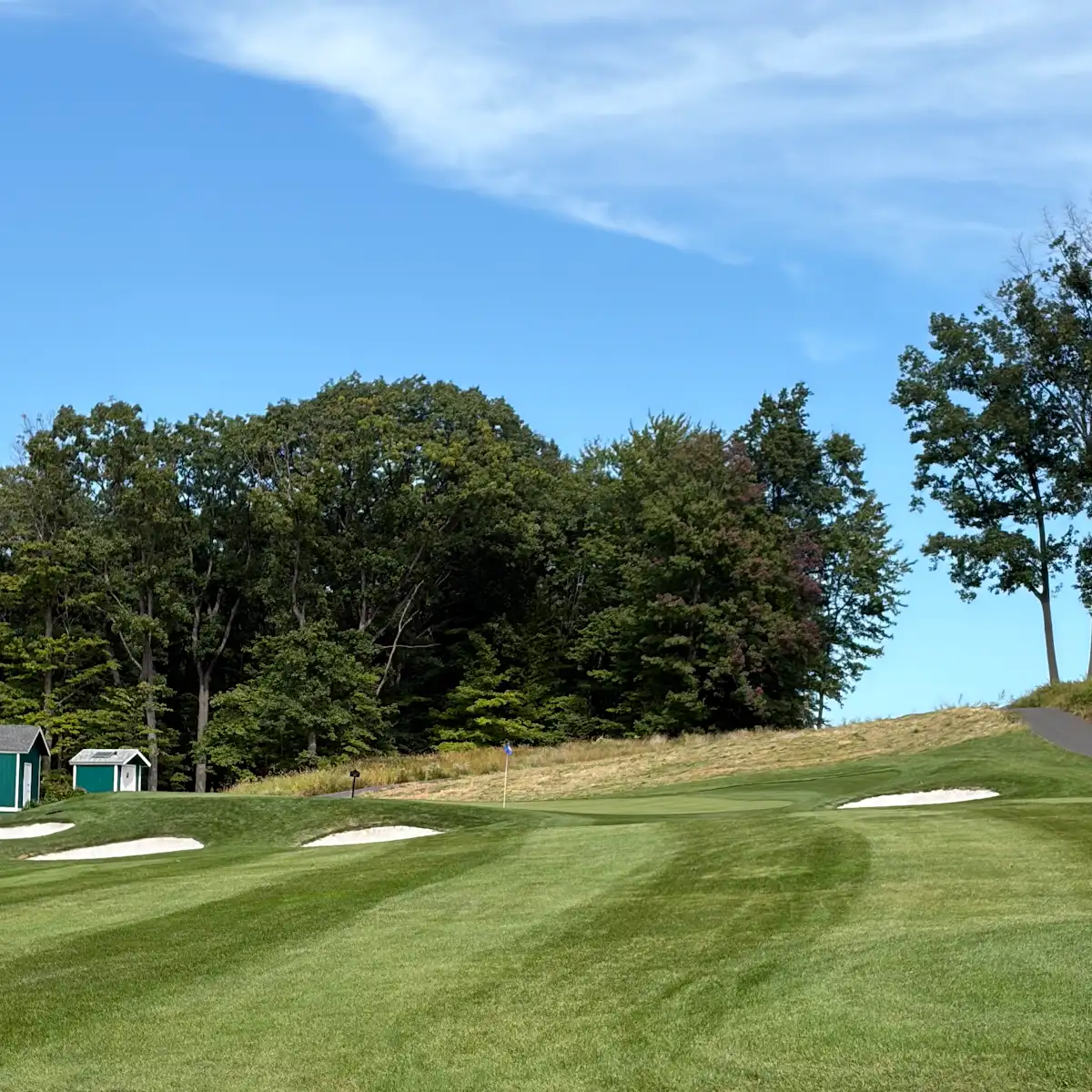
The hardest hole on the course comes by way of the sixth, a downhill par four of 440 yards. The fairway slopes from right to left and your tee shot must avoid the fairway trap on the right. The putting surface is guarded on either side by sand and again, is quite slick. With a quality tee shot, you should be able to attack the green with a short iron.
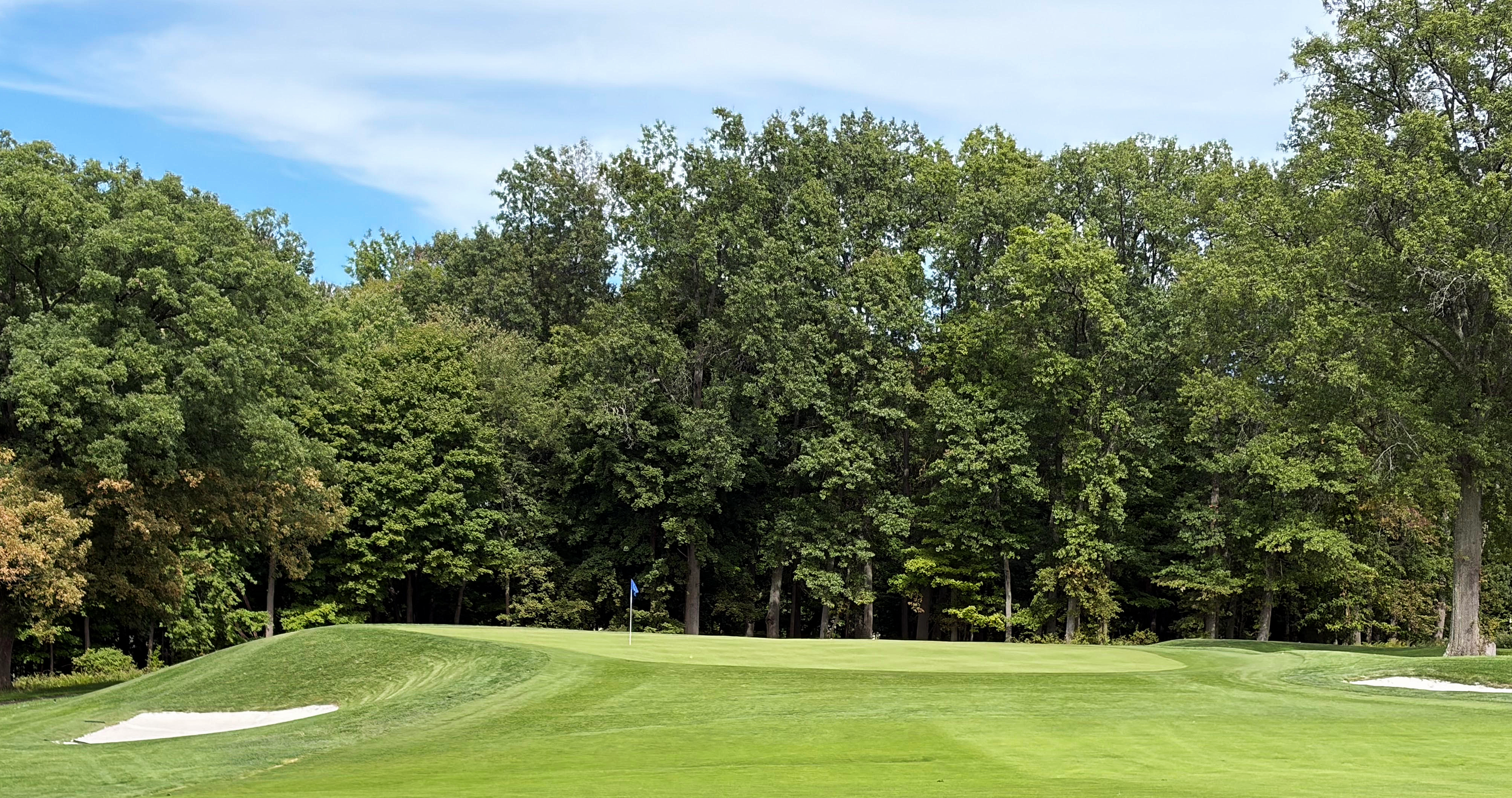
Number seven is one of the shorter par fours on the course at just 362 yards. Don’t be fooled, as it plays uphill all the way to the green. The fairway slopes from left to right, with sand guarding the left. Your approach will require at least one extra club, as the surface features a severe false front and is two-tiered.
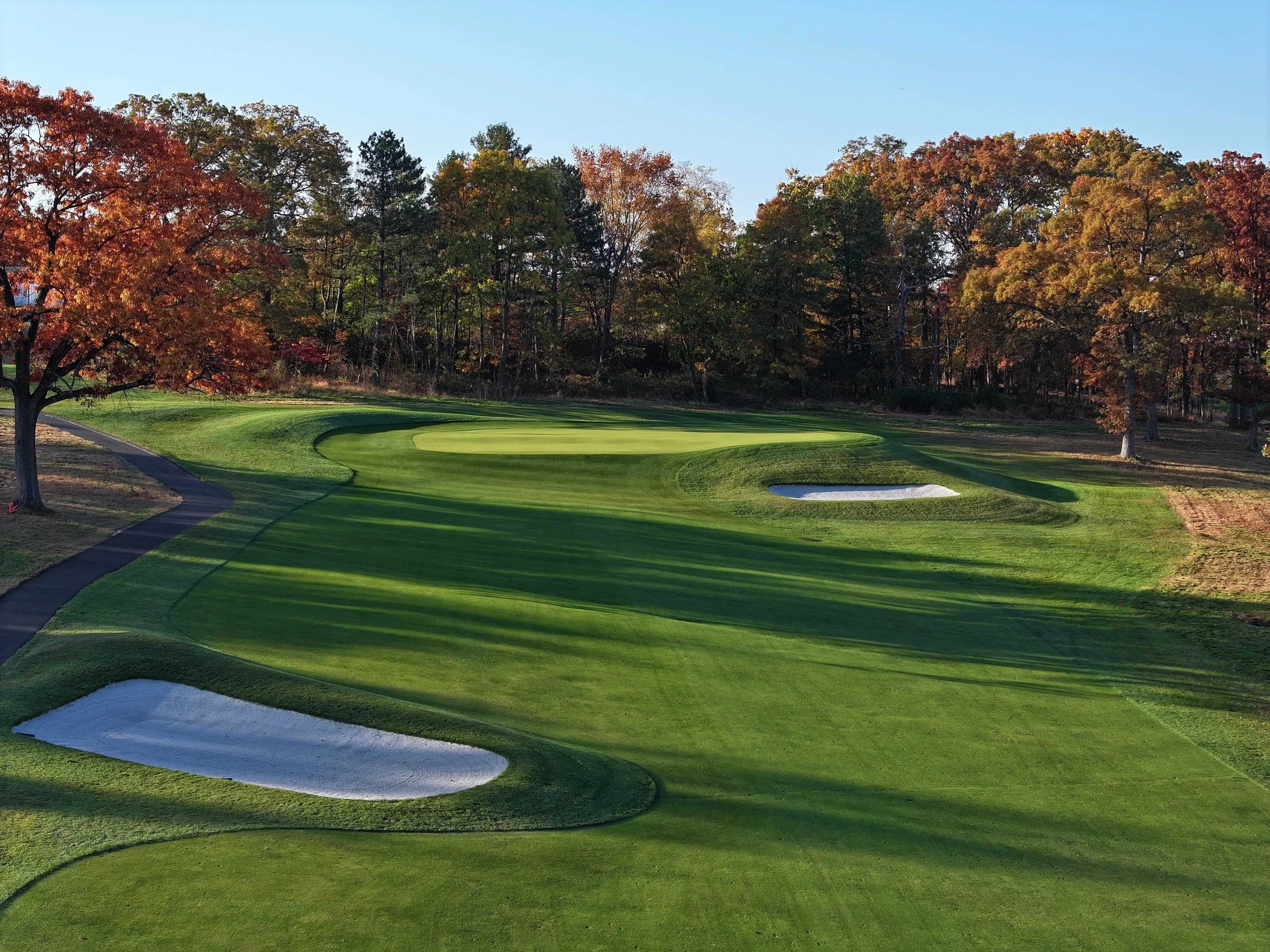
Another sloping fairway, the eighth is straightaway, but the landing area moves from right to left with a tough fairway, and sand down the right. Although downhill from the tee, you’ll need a pinpoint tee ball to have any chance of reaching the green in two. The putting surface runs from front to back with a deep swale left, along with sand. Missing right and long is no bargain either! When this hole was part of the Essex County Country Club, it played as the first hole.
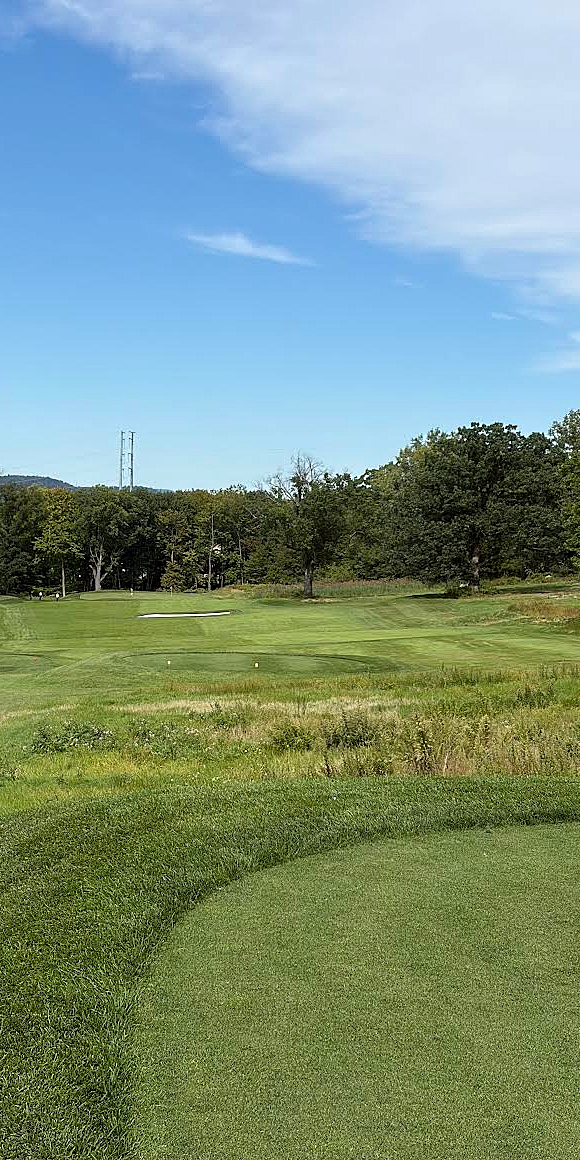
The closing hole on the outward nine is another massive par four, this one reaching 472 yards. Although downhill, you’ll need a big tee shot to leave a medium to long iron to the green. Sand down the left and OB right will tighten your hands just a bit! A fronting bunker, short of the putting surfaces nixes your chances of running the ball to the green, so plan accordingly. The green features a horseshoe-shaped surface or a thumbprint of a design. This hole was originally a par five, however it was shortened to make room for a parking lot and the clubhouse after it was sold to the county.
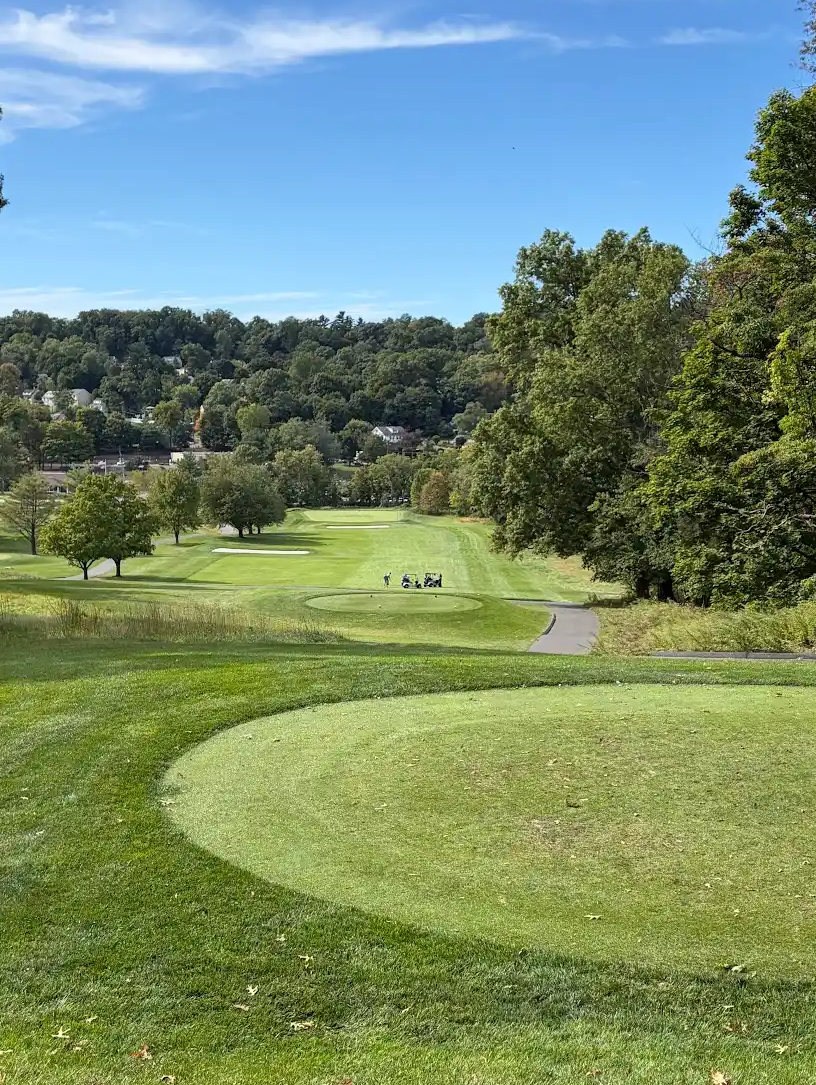
The back nine starts with another 400-plus par four. This straightaway two-shotter features a sloping left-to-right fairway with a bunker dissecting the landing area. If you can blast your tee ball down the left (avoiding the sand), your shot will hit the speed slot and trundle down the fairway. This will leave a medium to short iron to green that slopes back to front with a severe drop-off on the right.
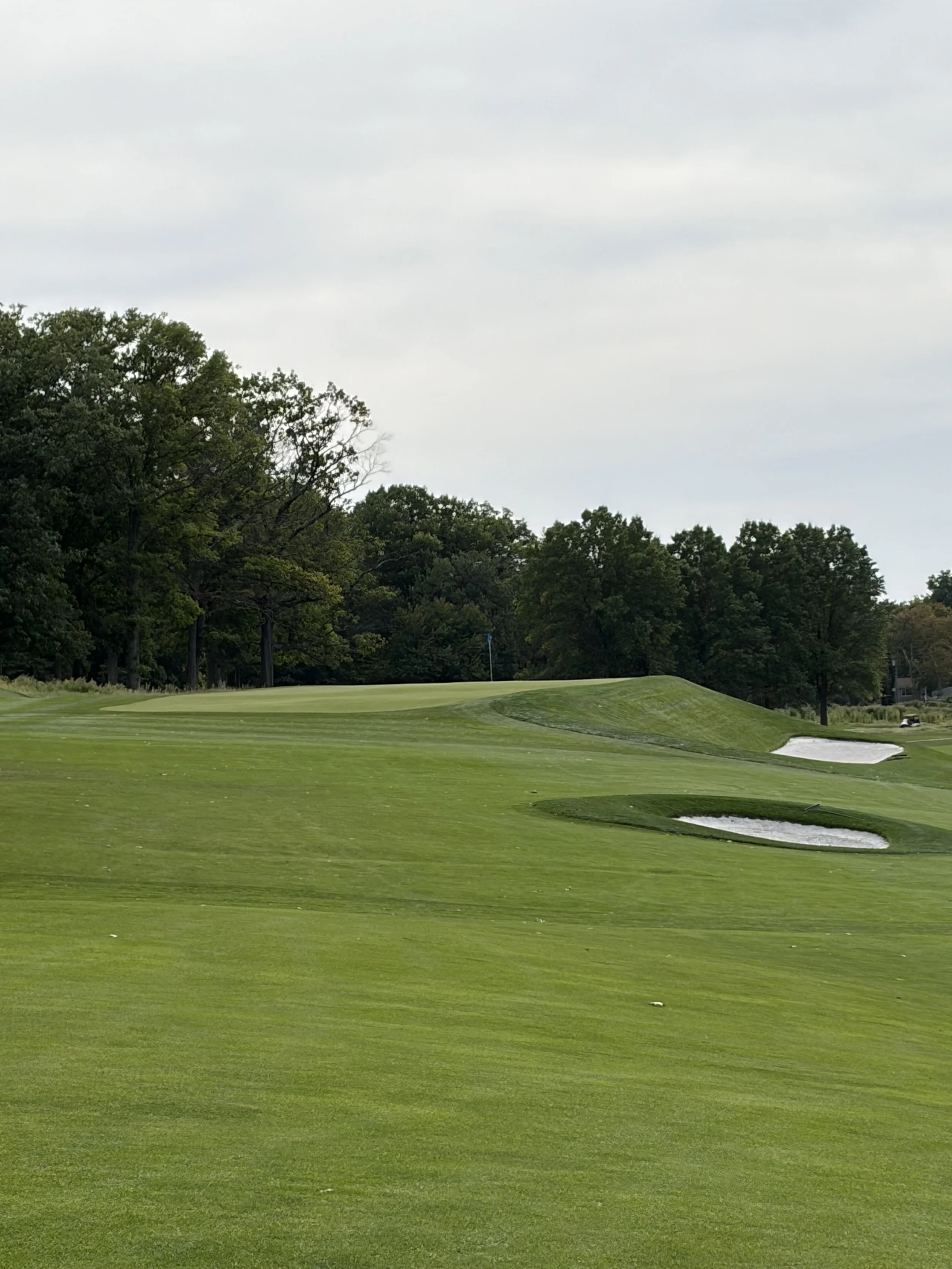
More of the same on 11, which runs parallel to number 10. Favor the right side of the landing area off the tee, as it slopes from right to left. Sand does protect the right, so a nice draw will suffice. Your approach plays downhill to the green with a deep trap left of the surface. The promised land is slick from back to front with plenty of slope throughout.
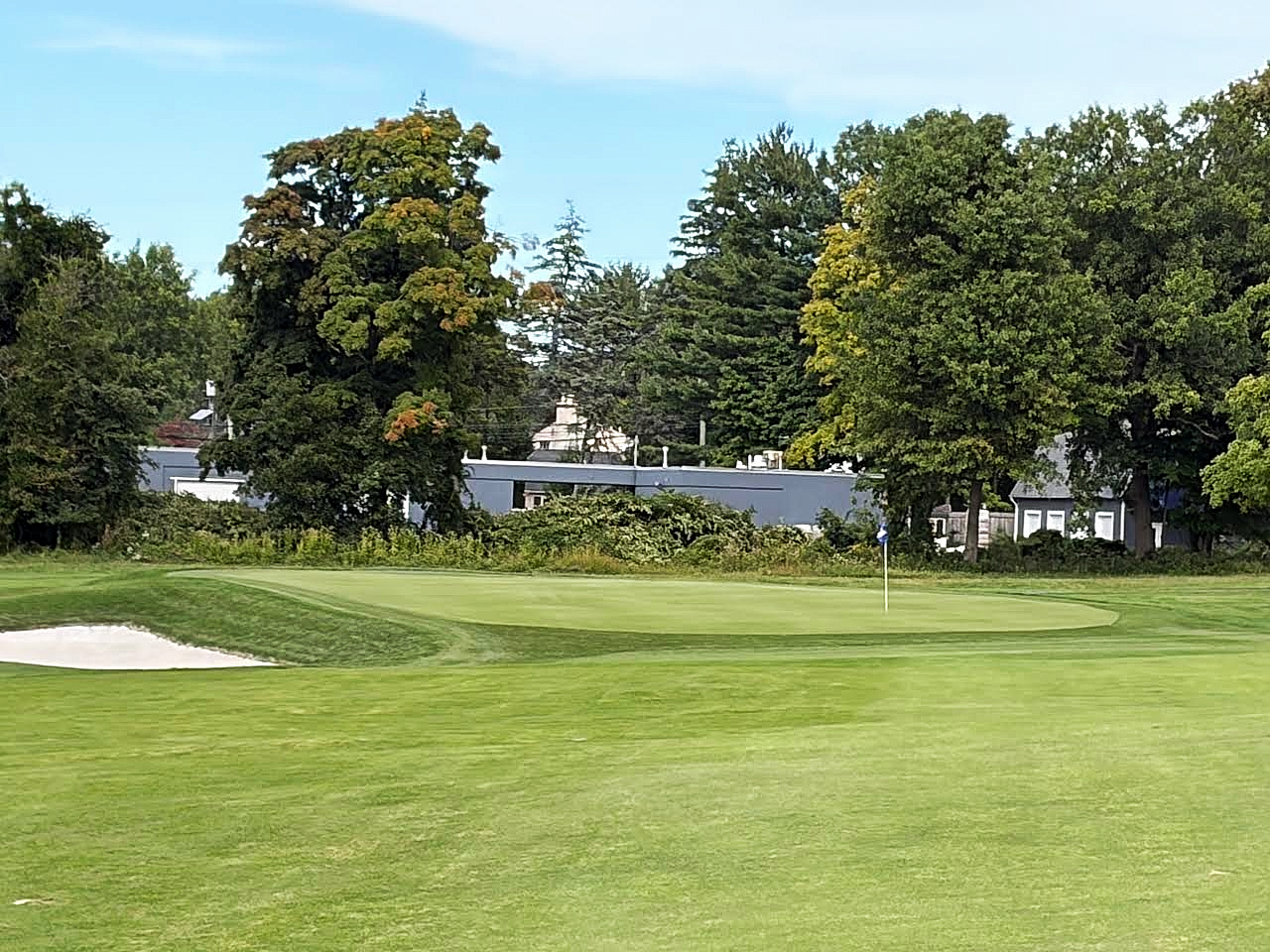
The only hole on the course without sand, the 12th is probably the most difficult at Byrne. Uphill from tee to green, you’ll need to favor the left side, as your tee shot will move to the right on the sloping landing area, flanked left by thick trees and rough right. Now you’re left with a difficult approach to an extremely difficult green that slopes hard from left to right and back to front. It comes to reason that the nickname on this behemoth is…Long Climb.
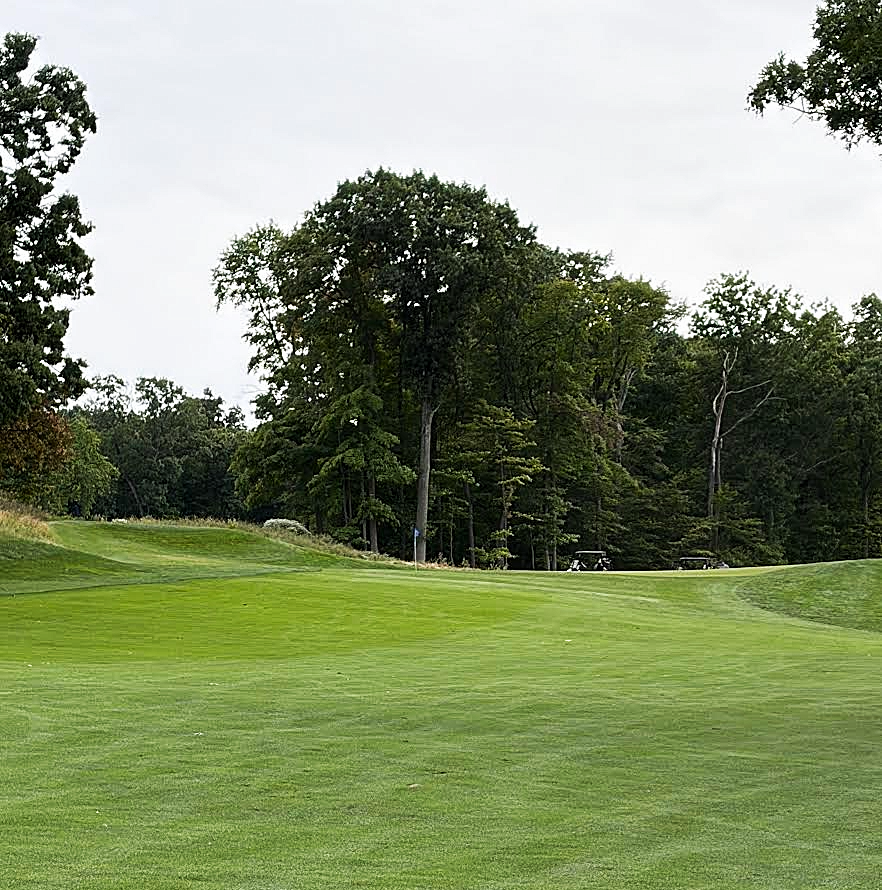
The Principal’s Nose is the appropriate name for the 13th. Although over 400 yards, this hole plays entirely downhill from the tee, with never-ending trees on both sides of the left-to-right sloping fairway. The namesake bunker was added down the middle of the landing area, around 260 yards out, so choose your club wisely off the tee. Sand left and a large drop-off right protects the two-tiered, left-to-right surface.
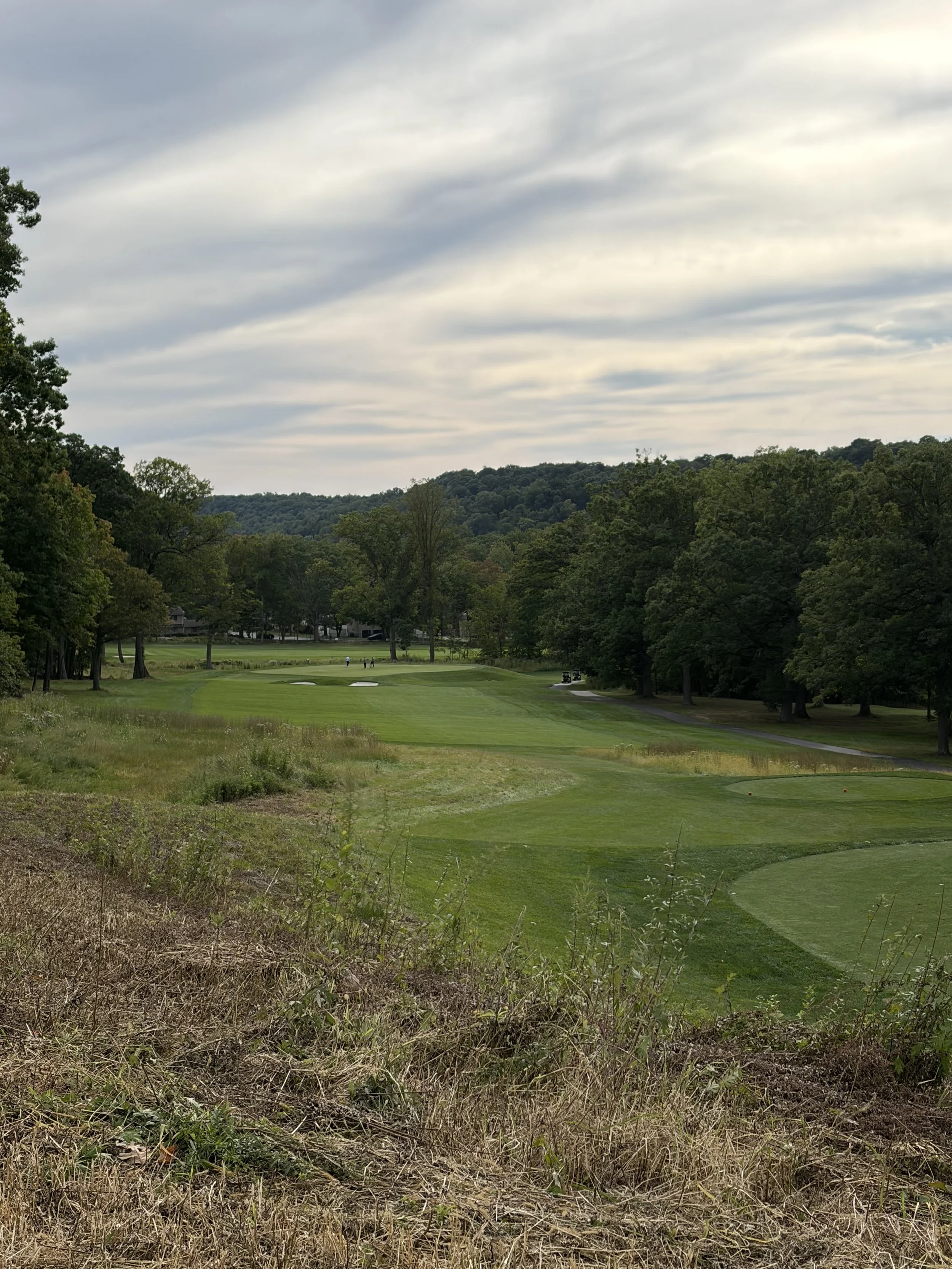
Number 14 is a two hundred plus par three that plays downhill to the green. A bunker left guards 50-percent of the green, while a deep trap guards the right. In addition, drop offs right and rear are to be avoided if you’d like to make par. The green is another back-to-front sloped surface.
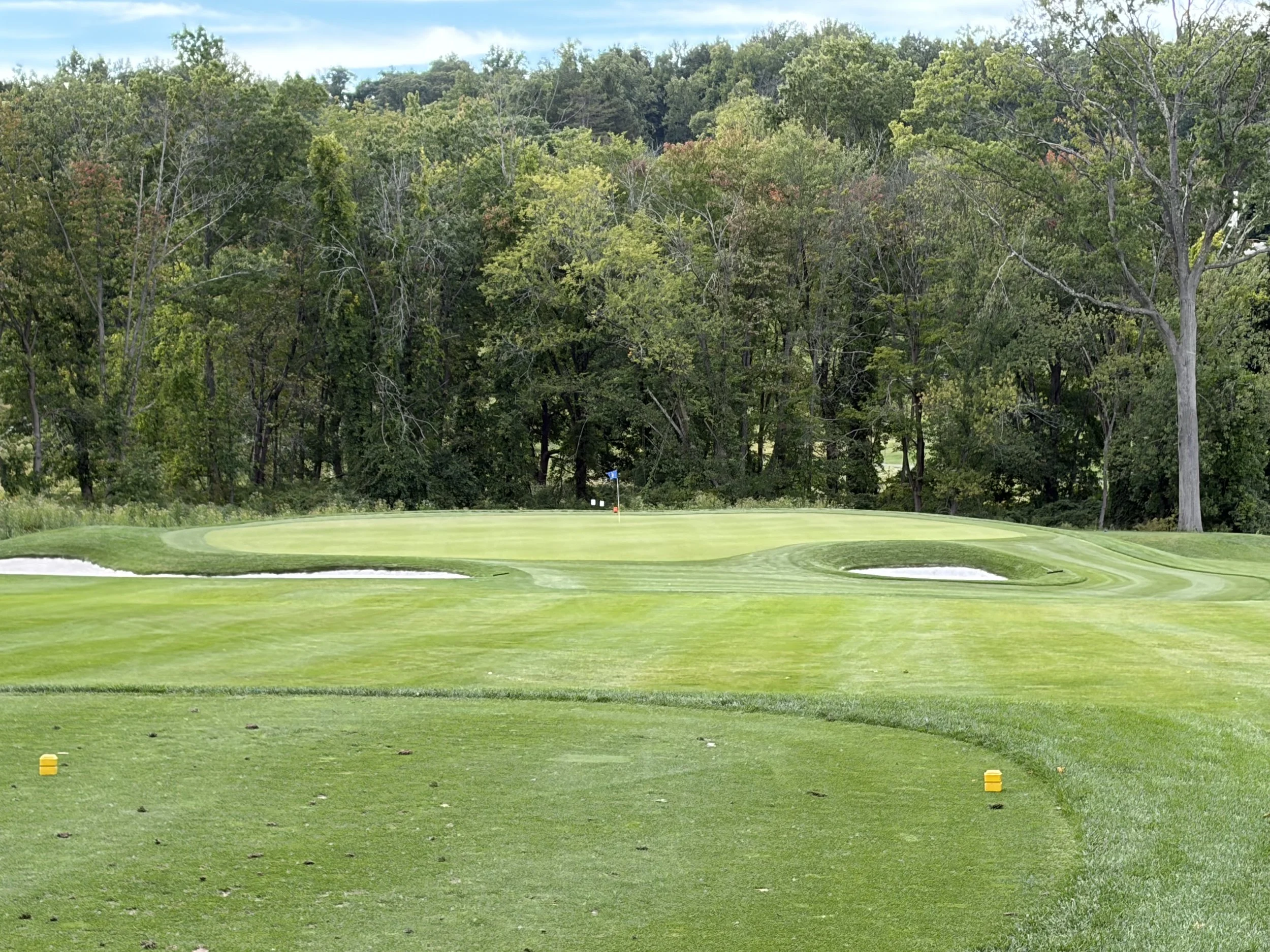
Originally crafted as a par four, the 15th is now a reachable, dogleg left par five of just 503 yards. However, two things must happen first. Your tee shot, which is slightly uphill, must miss the bunker on the corner of the dogleg. Secondly, your approach should play down the right, as the fairway tilts to the left. This will give you your best chance at birdie. If you’re not able to reach in two, you need to avoid the bunker down the right at the 100-yard mark. One of the smaller greens on the course, its guarded with a pair of traps on the left.
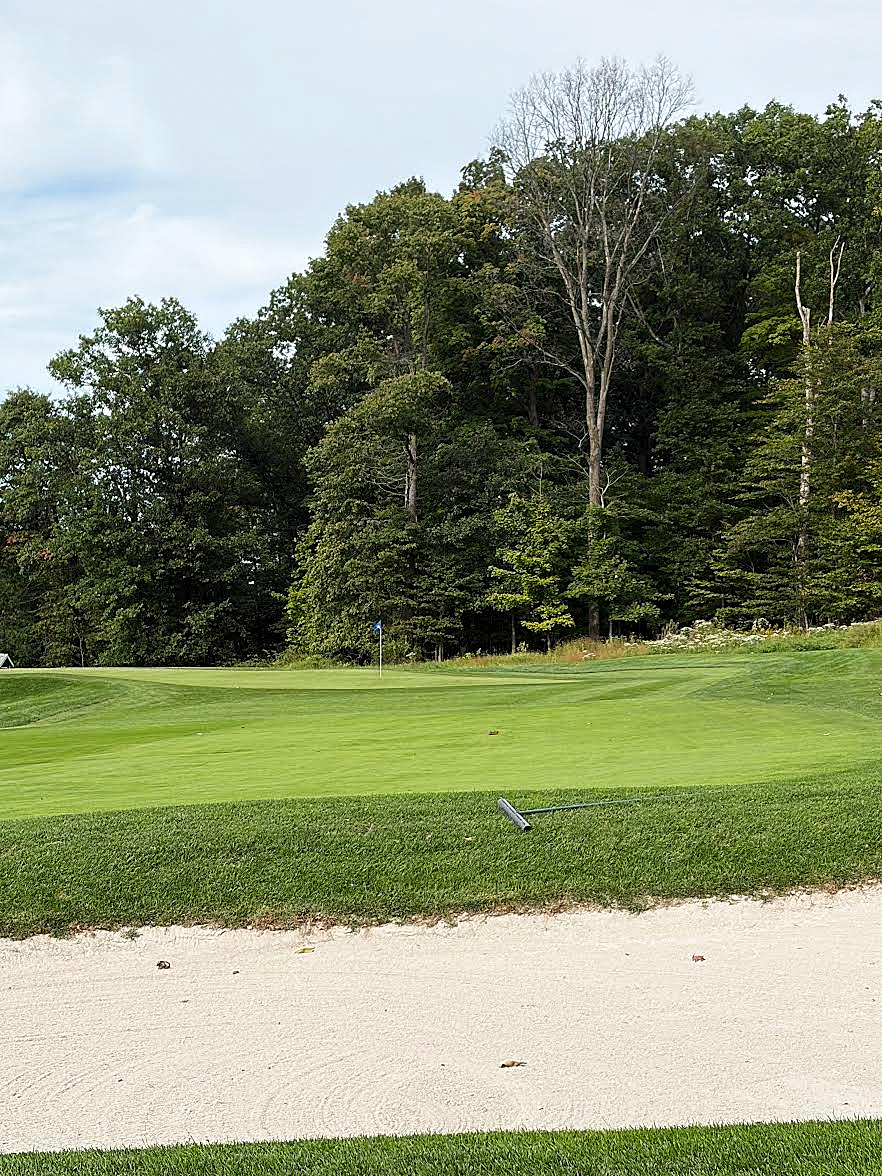
One of my favorite holes on the course is the 16th, a wonderful, dogleg right par four that stretches 442 yards from the tips. Offering wonderful views of the course, this gem plays from an elevated tee box with tees protecting the right side of the fairway. Your approach with a medium iron must now clear the Rahway River en route to the promised land, an elevated, circular and fairly small green that slopes from left to right and front to back. Making par here will go along way to protect your score.
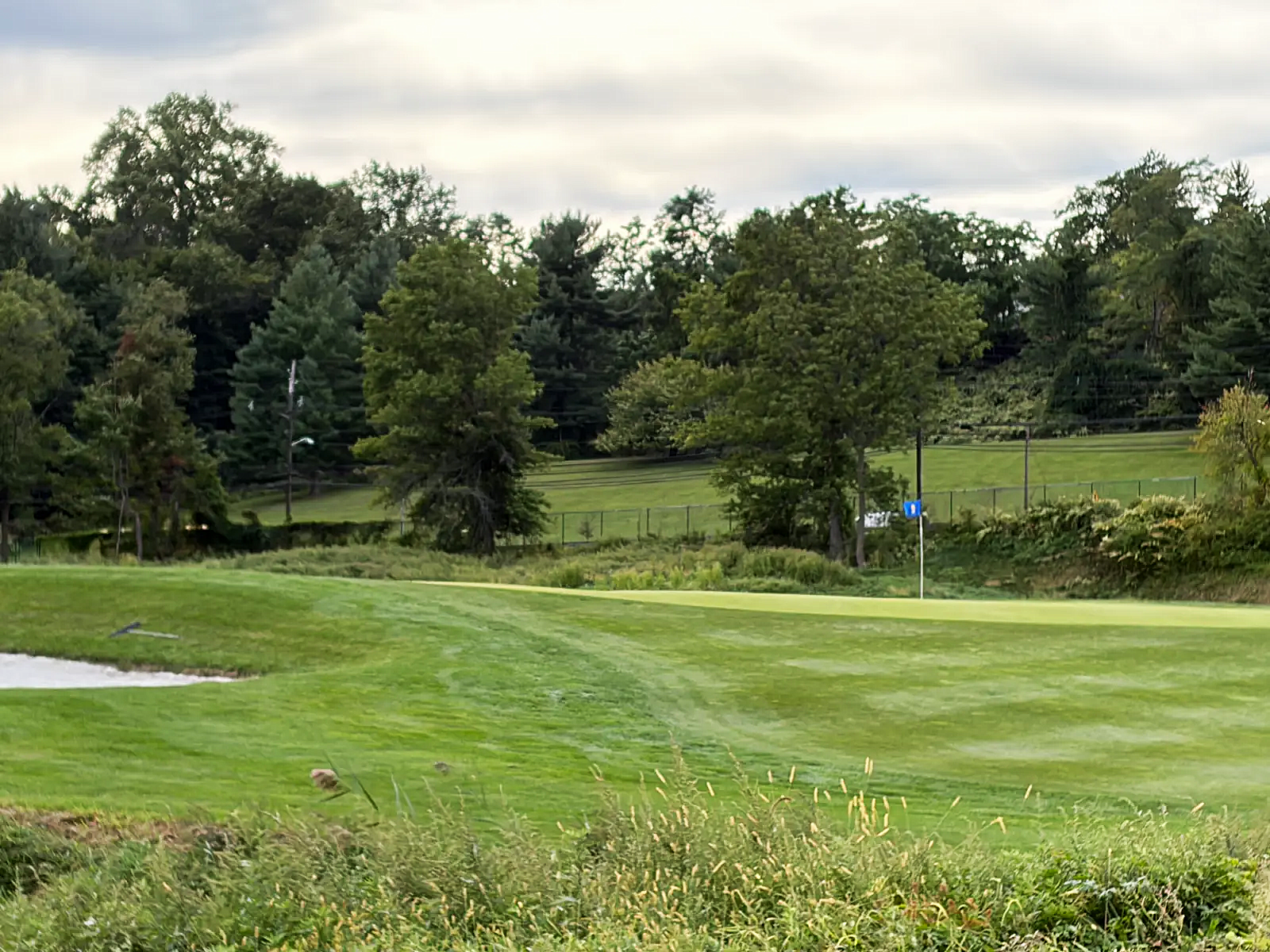
The final one-shotter is the 17th at 218 yards. Playing uphill, you’ll need to favor the left side, as the green slopes from left to right. Missing to the wrong side can result in sand or worse, the river!
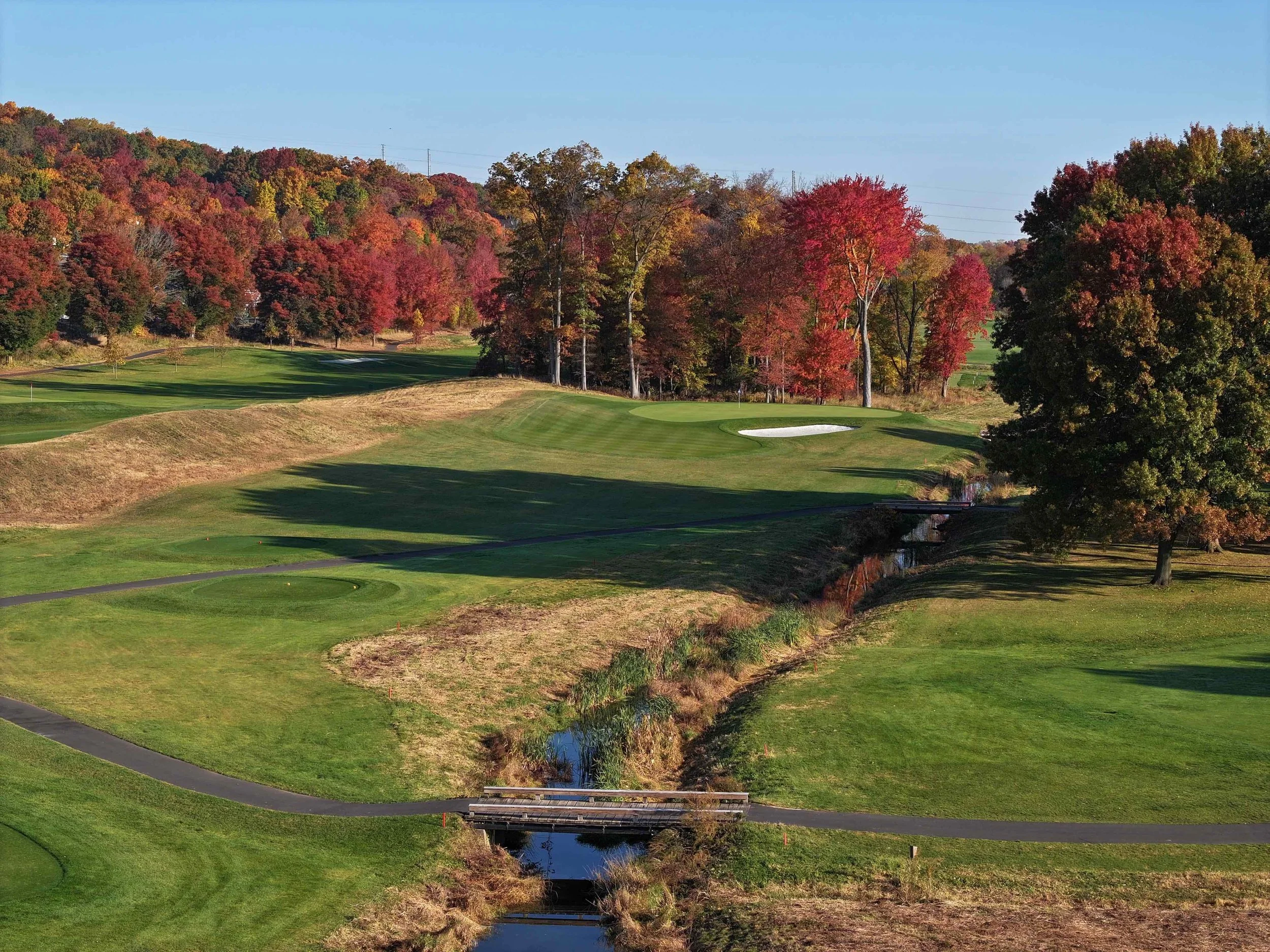
Originally a par four, the closing hole was remade into a lengthy par five, just under 600 yards long. This serpentine monster requires length and accuracy off the tee, as sand guards the right side and the river runs down the entire left side. Your layup needs to avoid the sand traps on either side of the fairway, thus leaving a short iron to a square-shaped green that runs from back to front. A wonderful finishing hole to a wonderful golf course.
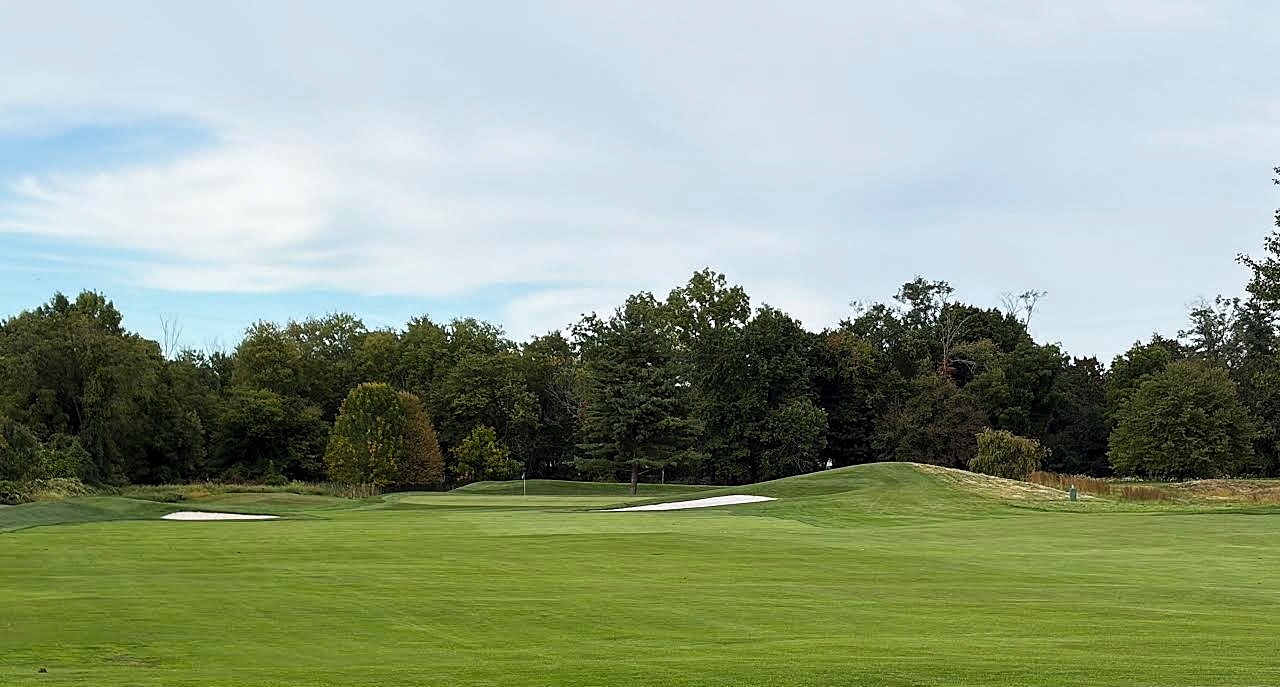
FINAL WORD: You’ll be hard-pressed to find a better public course in the immediate area, let alone North Jersey. The restoration work that Stephen Kay did at Francis Byrne was amazing. “Well, I would say it is one of the best restoration’s that I have done, for several reasons. We had a good budget and I worked with a great team,” added Kay. “Course superintendent Chris Krno and Director of Golf Operations Tim Christ and the remaining staff were just great to work with.”
First of all, the conditioning of the golf course is truly remarkable for a public golf course. I’m talking from tee to green. The putting surfaces are smooth as silk and as good as any private course, I mean…Any!
How about the price? Well, if you’re a cardholder and walk, it can be as low as $35 during the week and $65 on the weekend. For a non-resident, how does $65 during the week and $85 on the weekend. Add $25 for a golf cart and you’re right around $100 on the weekend. Go to the New Jersey shore and you’ll pay 50-75 dollars more!
With the prices of many of the public venues in the New York, New Jersey and Pennsylvania region being unaffordable, the Francis A. Byrne Golf Course is the perfect alternative. Not only is the price right, but the quality of the layout is phenomenal.
Furthermore, this course beautiful with its rolling fairways, undulating greens and deep bunkers, but it presents quite a challenge. The layout can run from just under 5,000 yards to as much as 6,971 yards and remember, it’s a par 70, so it plays even longer.
Scheduling a tee time might be hard to come by, but believe me, it’s worth fighting fore!