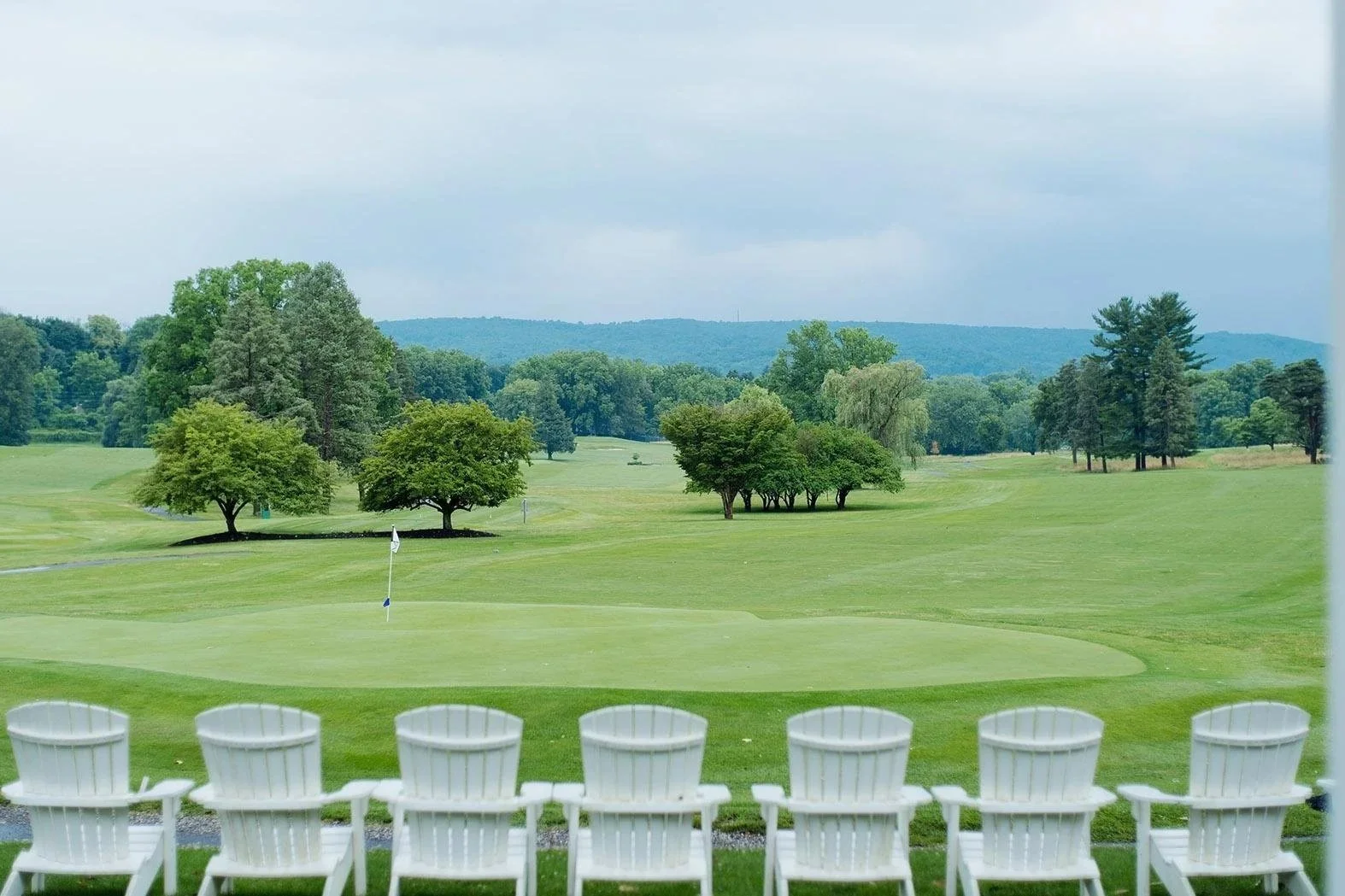
GOLF COURSE REVIEW - STEEL CLUB
Course Architect: Donald Ross (1948), William and David Gordon (1956)
Year Opened: October 1, 1948
Location: Hellertown, Pennsylvania
Slope: 137. Rating: 74.1
Par: 72
Yardage: 6,997
Hole-by-Hole: 1 - Par 4 444 Yds 10 - Par 4 428 Yds
2 - Par 4 303 Yds 11 - Par 4 410 Yds
3 - Par 4 387 Yds 12 - Par 4 367 Yds
4 - Par 3 200 Yds 13 - Par 3 194 Yds
5 - Par 5 558 Yds 14 - Par 5 520 Yds
6 - Par 4 441 Yds 15 - Par 5 489 Yds
7 - Par 4 410 Yds 16 - Par 3 235 Yds
8 - Par 3 181 Yds 17 - Par 4 406 Yds
9 - Par 5 557 Yds 18 - Par 4 467 Yds
Par 36 3,481 Yds Par 36 3,516 Yds
Website: www.steel.club
Events Held: U.S. Open Local Qualifier (2021), U.S. Junior Girls’ Championship Qualifiers, Patriot League Men’s Golf Championship (2022), U.S. Senior Open Qualifier (2024).
HISTORY: As the story goes, the Bethlehem Steel Club, formed in 1934, hired one of the greatest course architects in the game, Donald Ross to not only design, but build a championship golf course in 1946.
Ross, who is credited with designing over 400 courses around the world, has crafted some of the finest venues in the United States, such as Aronimink, Plainfield, Scioto, Essex, Interlachen, Inverness, Oak Hill (East), Oakland Hills (South) and Seminole, all ranked in the top-100 of Americas Greatest Courses.
The Steel Club opened for play in 1948 and is regarded as one of Ross’ final designs before his death in ‘48. In Pennsylvania alone, Ross is credited with creating 26 layouts! Admitted to the World Golf Hall of Fame, Ross was an accomplished player as well, winning the North and South Open three times and the Massachusetts Open twice. He appeared in eight U.S. Opens (Four top-10s) and two Open Championships.
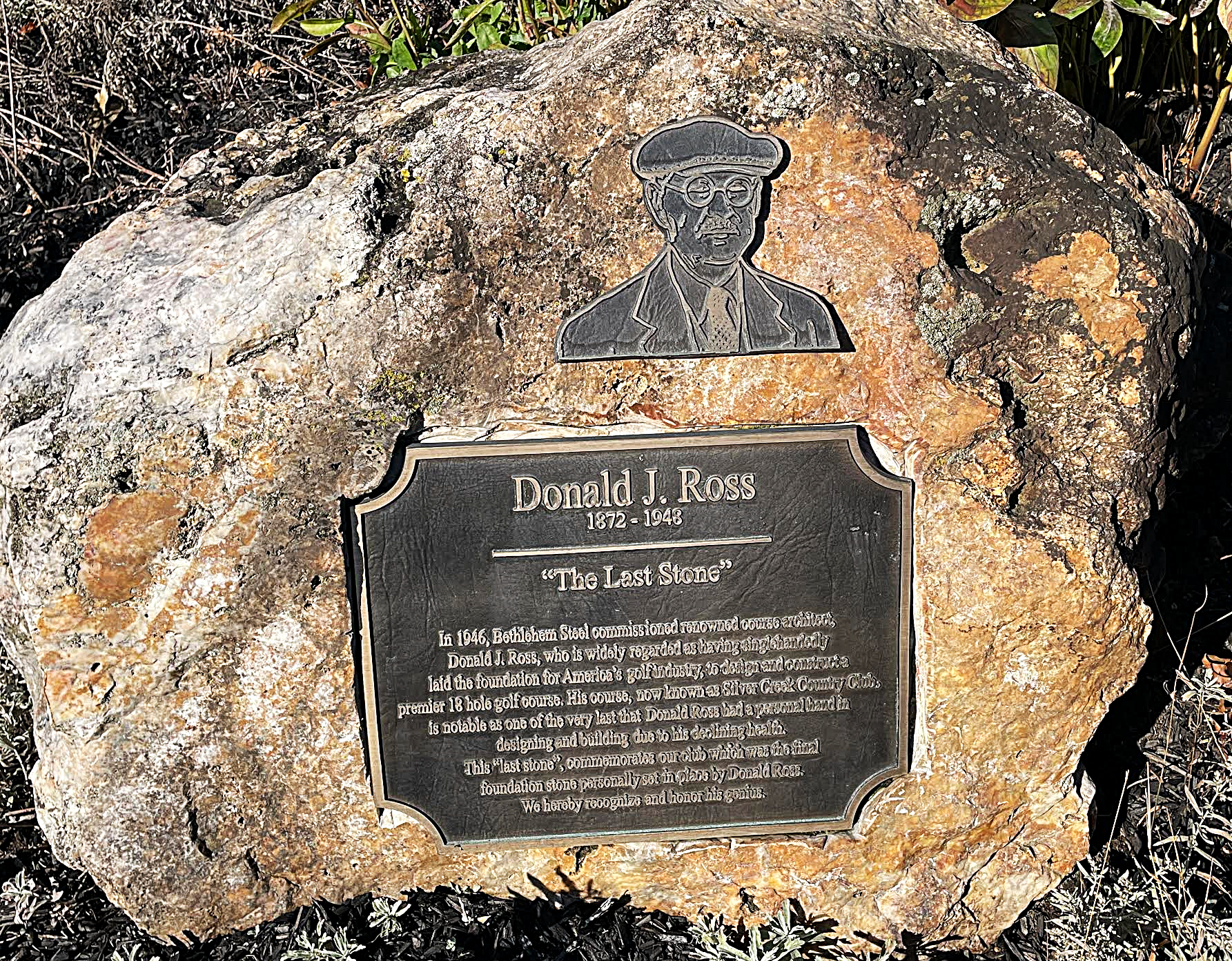
Although William and David Gordon were involved in the building of the course, make no mistake, this is Donald Ross. It turns out that the Gordon’s added an additional nine holes in 1956 on the other side of Wassergass Road, which comprises of holes 3-11. Ross is credited with crafting holes 1-2 and 12-18.
In 1986, the powers that be changed the name of the course to Silver Creek Country Club, as it became a private club, managed by its members.
Moving forward to 2018, local businessman and resident David Spirk, who learned to play golf at the club at a young age when his parents joined in 1951, purchased the venue and made a commitment to invest at least $2.5 million in improvements and to keep it as a private golf club. In addition, Spirk renamed the course back to its original roots, the Steel Club and is determined to make it a top notch country club.
Plans are already in the works to build custom homes on part of the land that sits above the driving range. “The plan is for 168 custom homes up on the top ridge behind the driving range,” said head professional Mark Chlebek. “In addition, a nine-hole par three golf course will be built on the land where the original Hill Course was and a big fitness center and turf bubble is part of the grand scheme with a two-story driving range.” With 280 acres and a 27,000 square foot clubhouse, the skies the limit. So stay tuned.
The Steel Club has hosted several USGA qualifying events over the years, including the 2024 U.S. Senior Open qualifier. Playing just less than 7,000 yards, the course stood up against some of the best professionals and amateurs, as not one single player broke par. In fact, the low score was one-over par by five players, including amateur Michael Brown, who qualified for the Senior Open at Newport Country Club last year.
“I’ve been competing for 30 years,” Brown, a three-time William Hyndman, III Player of the Year, said. “Most of my family doesn’t know where I’m playing and what I am playing in. They just know that golf is all I do. In a lot of ways golf is who I am to them, which is cool. I have no problems with that, but it’ll be nice for them to see what was motivating me.”
Although Brown failed to advance to the weekend at the U.S. Senior Open, he certainly held his own, as he shot rounds of 73-71 to miss the cut by two shots. Other notables who missed the cut, Woody Austin, Mark Calcavecchia, David Toms, Jeff Sluman, Colin Montgomerie and Tom Lehman.
“Although nothing is in the works currently, we are always open to hosting key events, as we enjoy showcasing the place,” added Chlebek.
COURSE REVIEW: How many courses do you know that start off with the hardest hole on the course? Not many, I can assure you. This is certainly the case at the Steel Club. The opening hole is a rugged, uphill par four that stretches 444 yards from the silver tees. Bending ever so slightly to the left, the first requires an accurate tee shot, avoiding the bunker on the left of the landing area. Aiming left will help you negotiate the left to right sloping fairway. From there you’re left with an ascending approach to the green. Sand on either side of the elevated putting surface leave very little for a bail out. The green slopes severely from left to right and back to front. Missing long is no bargain either, as you’ll be left with a difficult up and down. That is one heck of an opener.
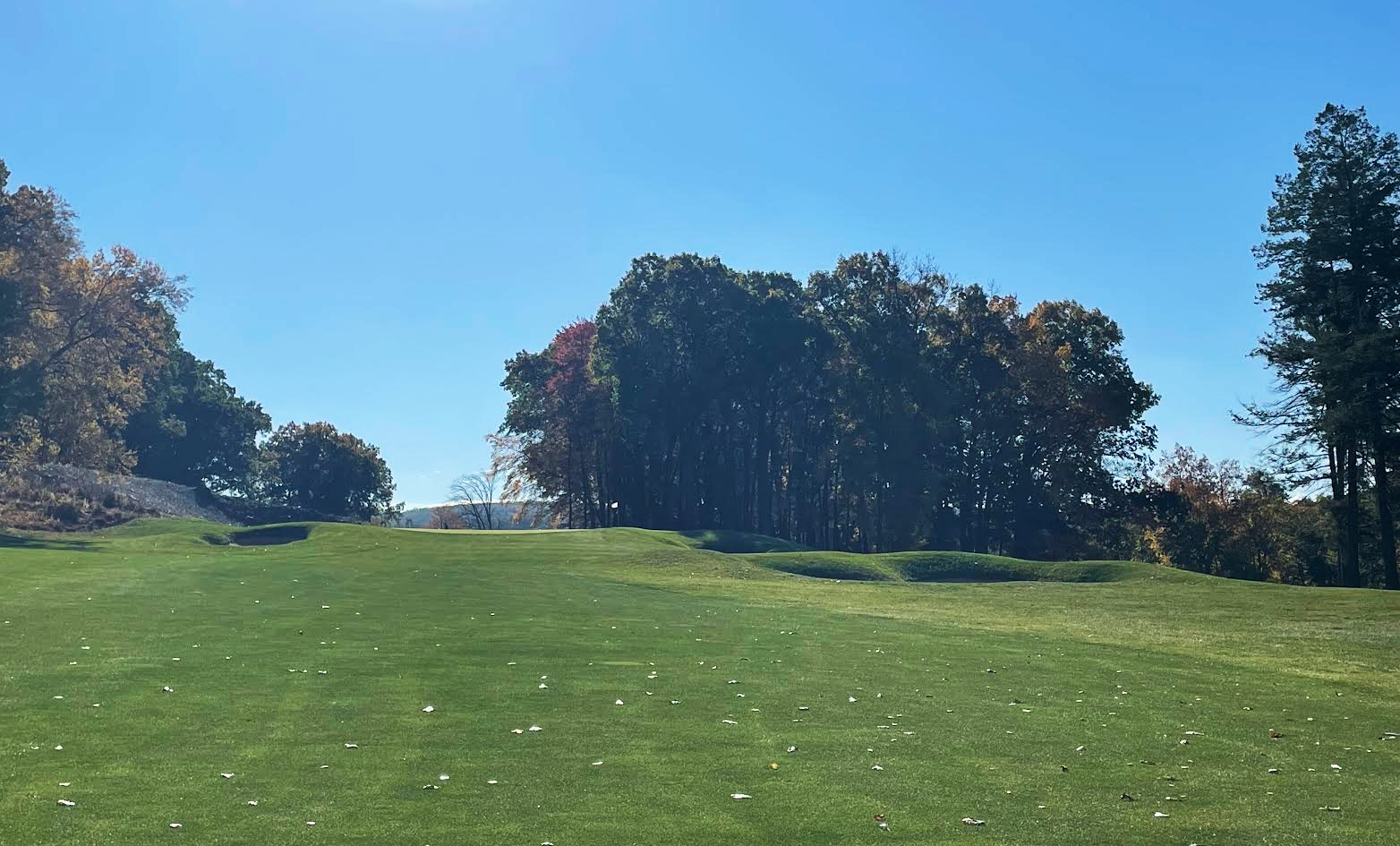
The second hole gives the player an opportunity to get one back, as this downhill par four can be had. Just 303 yards in length, this two-shotter features dense trees down the right and trees and out of bounds to the left, but with a successful tee shot, you’ll be left with just a little wedge to attack the putting surface. Sloping from back to front, the green is guarded by a pair of bunkers in the front. Although the big hitters can go for the green, there is little or no chance of holding your tee shot on the surface and any play long will result in a big number.
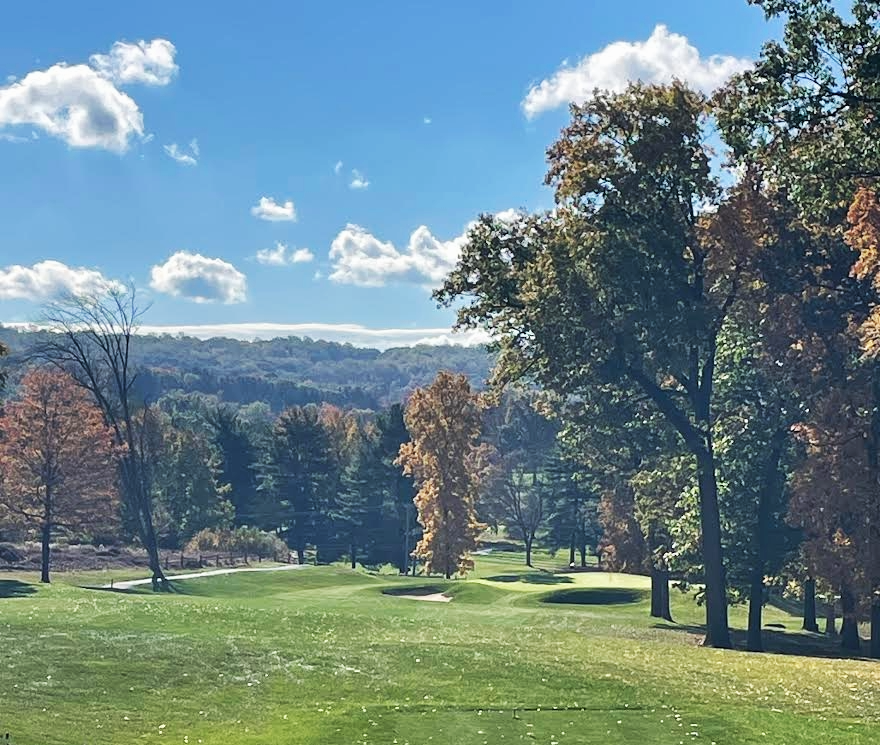
One of the more difficult driving holes at the Steel Club is the dogleg left, par four third. Although just 387 yards in length, sand and trees down the right tighten the fairway and a tall oak stands tall on the left, along with a pair. of bunkers. With a quality tee ball, you’ll be left with a mid-iron approach to another well-guarded and slightly elevated green, however if you’re in need to run your shot up, the bunkers on either side leave an opening in the front. The false front will repel any shot left short, so play accordingly.
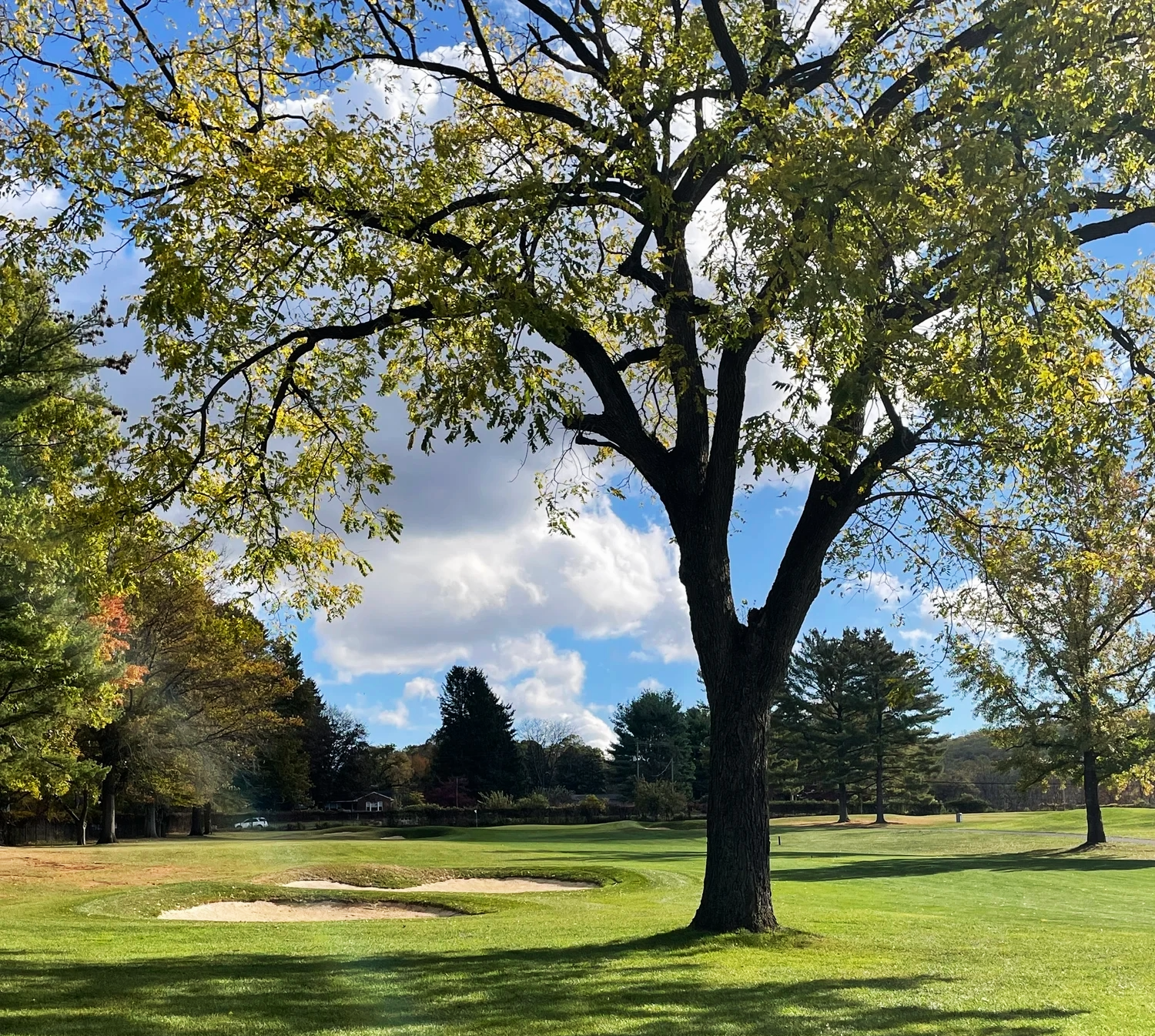
The first par three on the course is the downhill fourth, reaching 200 yards in length. Usually played into the wind, this one-shotter features a wide putting surface that runs from back to front. In addition to wide, the green is quite long, with a bunker down the left side. Try to stay below the hole, as anything above could result in a three-putt.
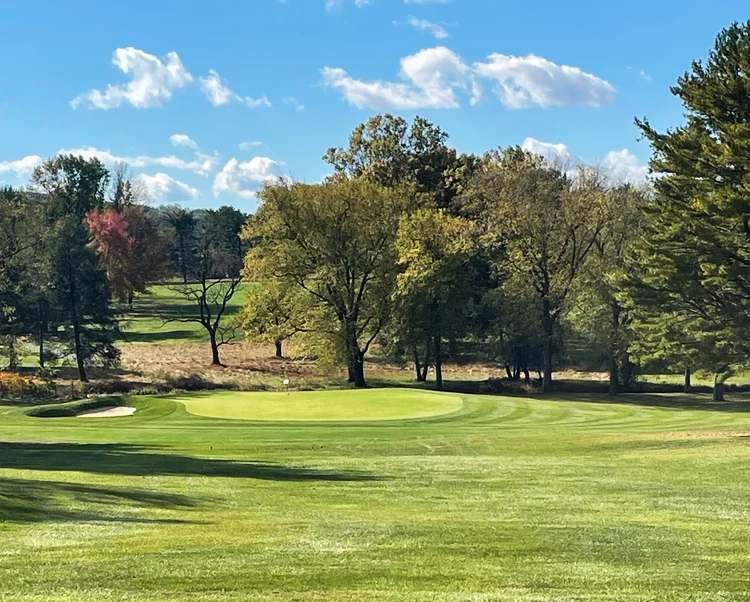
Number five is the longest hole on the course, stretching to 558 yards from the back markers. What you see is what you get, as this straightaway par five is long and lean and plays uphill from the tee. Trees and out of bounds guards the left with just one fairway bunker on the right. The best play is to lay up to a reasonable yardage and then attack the green. Three bunkers protect the putting surface, which is fairly benign in slope. Although long in yardage, birdies can be made.
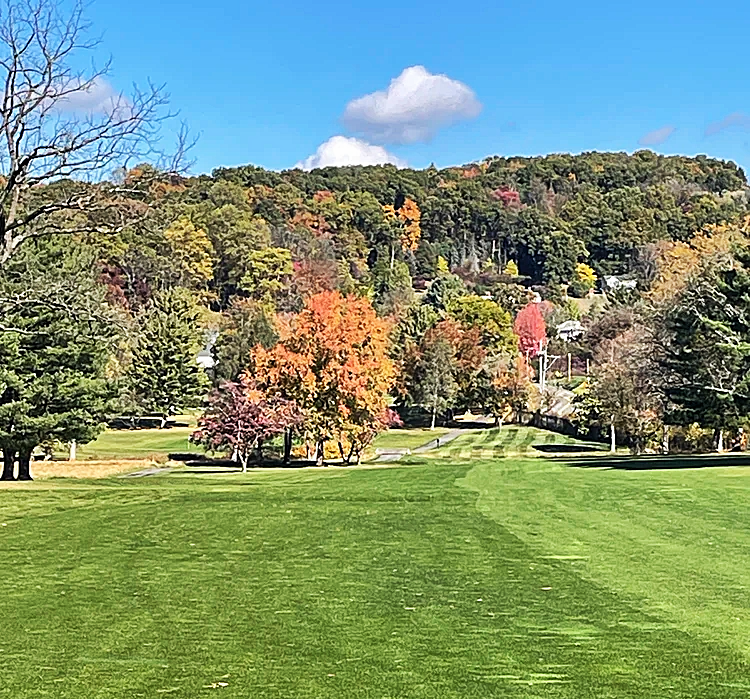
One of seven par fours over 400 yards in length, the sixth is a difficult dogleg right that plays uphill off the tee and then down to the green from the fairway. avoid the trees on both sides of the landing area and you’ll be left with a medium to long iron to the green. The long and narrow putting surface possesses sand on either side and runs hard from back to front. If you find yourself in trouble off the tee, play a run-up shot, as the front of the surface is wide open.
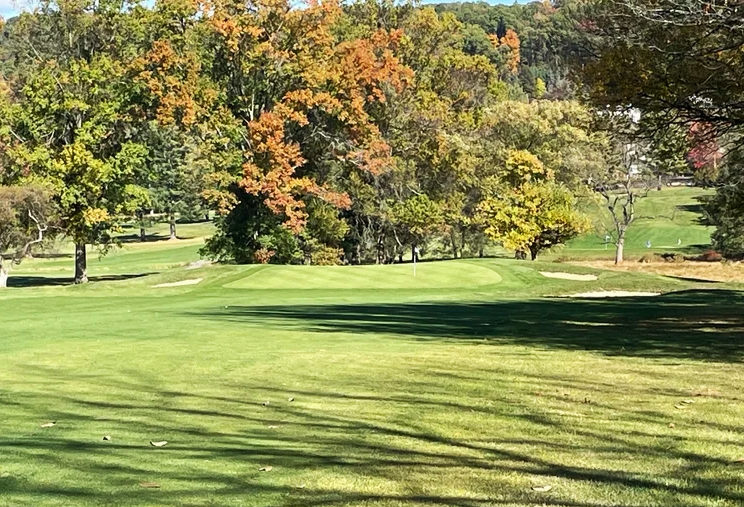
The seventh is another 400-plus par four that also bends from left to right. This one requires a solid tee ball down the left side and over a creek to the fairway. Your approach shot with a short to medium iron will be uphill to the green that features plenty of slope. Avoid the two bunkers flanking the surface to give yourself a shot at birdie on one of the most difficult holes on the course. One word of caution, a back-right pin will certainly be difficult to go after, so play towards the middle of the green.

One of the most picturesque holes at the Steel Club is the par three eighth. Playing at 181 yards and usually into the wind, you’ll need a quality play off the tee, covering the fronting pond and negotiating the wide green. The putting surface runs from back to front and is quite slick with a bunker on either side. This gem is rated as the 11th most difficult hole on the course.
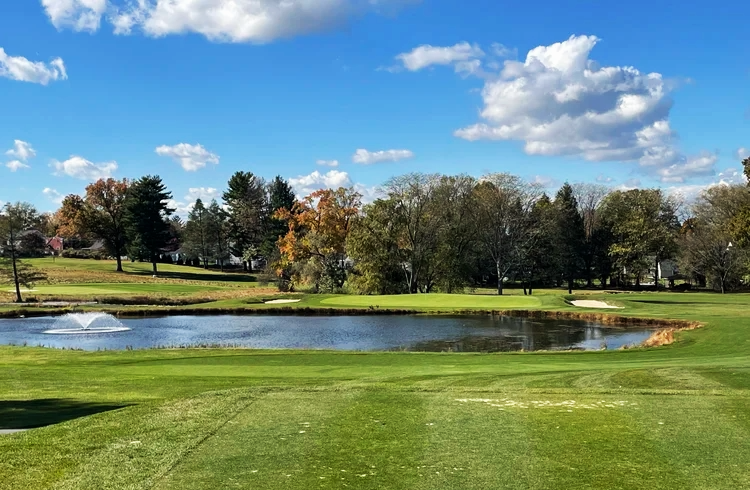
Playing uphill from tee to green, the par five ninth can be stretched to 557 yards and bends to the right. Although devoid of sand off the tee, trees adorn the left and right sides of the fairway. Your layup will need to avoid the fairway bunkers on either side of the landing area. Now it’s time to attack, especially if you have a short iron in hand. The green, with a false front, runs hard from back to front and left to right with a pair of traps near the front. Stay below the hole for your best shot at birdie.
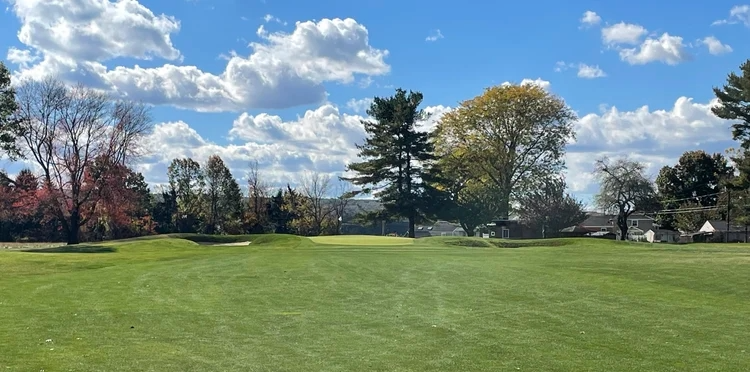
The back nine opens with a robust, downhill par four that bends from right to left. Fairway bunkers on either side of the partially blind landing area shrink the zone, not to mention the out of bounds left and trees right. Now it’s straight downhill to the green. A medium iron remains to another putting surface that slopes severely from back to front with bunkers on either side. Take one less club, as anything short will run up to the green.
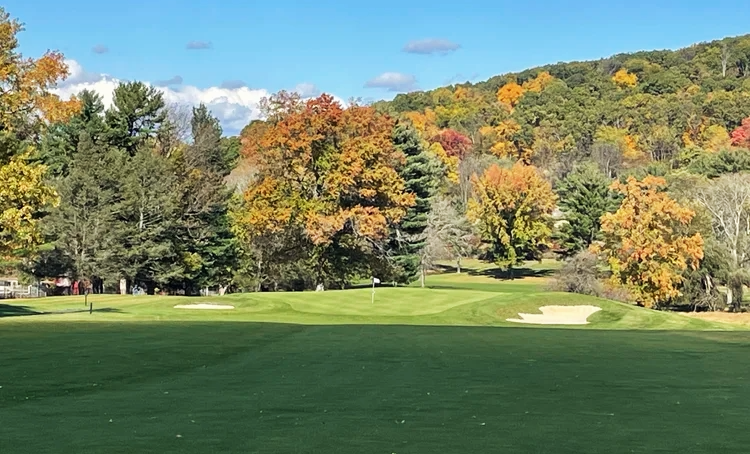
The eleventh hole is a wonderful downhill off the tee, near 90-degree, dogleg left par four of just 410 yards. The key here is placing your tee shot far enough past the trees on the left to leave a straight shot to the green. The putting surface is slightly elevated and requires pinpoint control as to avoid the bunkers on either side and the slope behind the deep green.
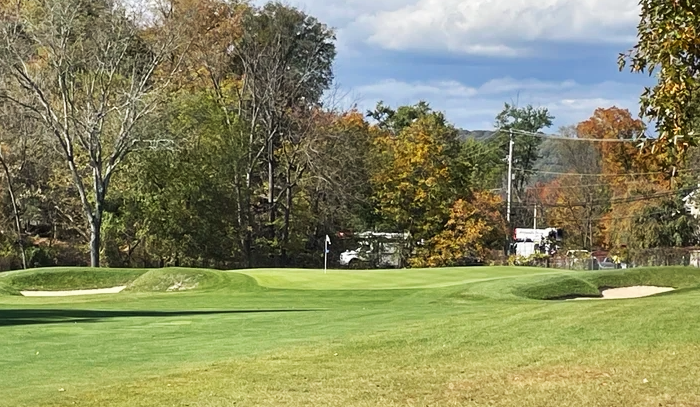
One of the most difficult driving holes, the 12th bends sharply to the right, however the fairway slopes hard to the left. If you do find the fairway, your approach is straightforward with a medium or short iron and although the green is fairly open, the bunker left captures plenty of errant shots. Miss right and you’re left with a difficult chip from a shaved bank. A back-right flag will prove to be the most difficult.
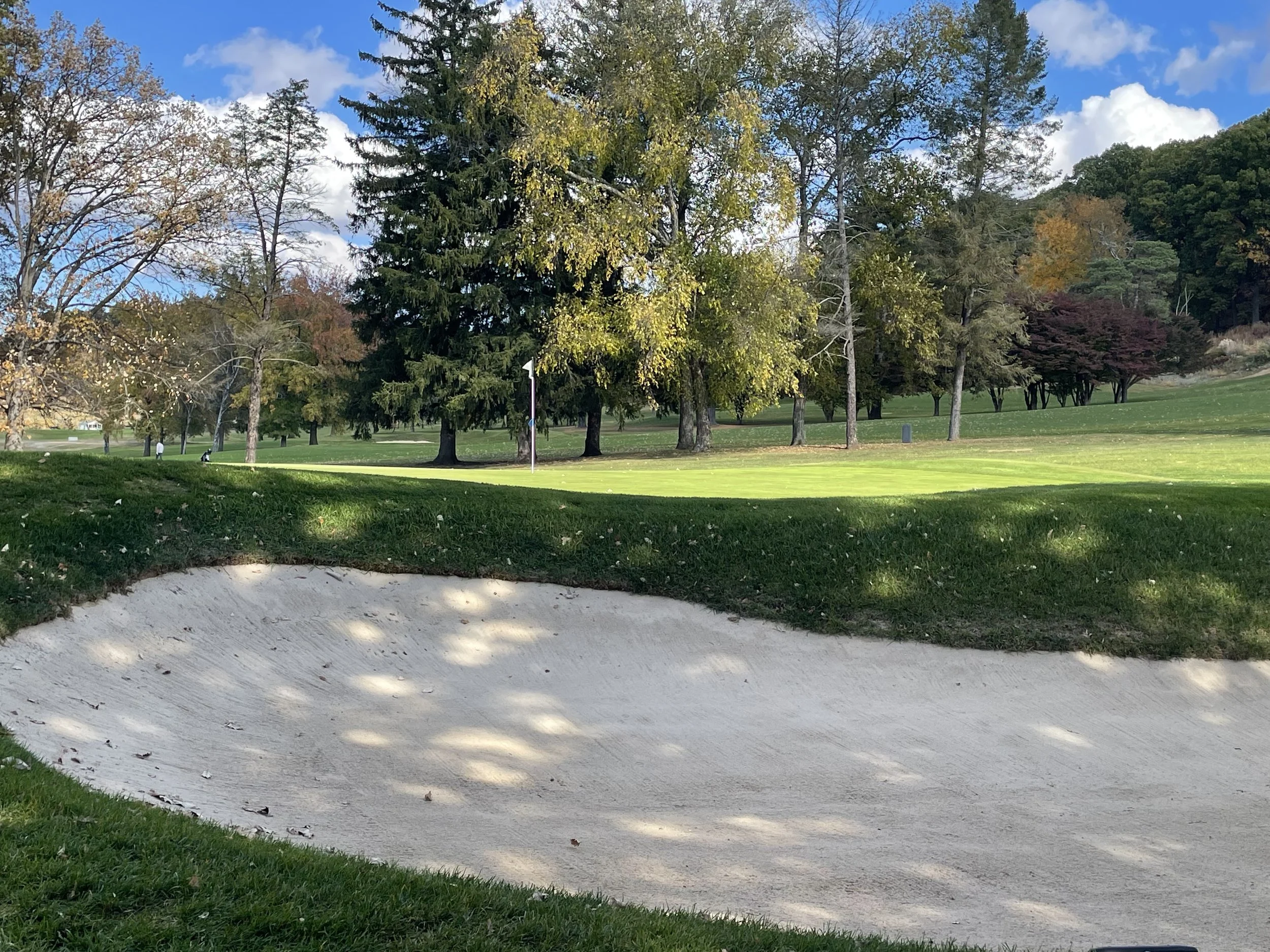
The first par three on the backside is a fairly long one-shotter that plays slightly downhill to a round putting surface. A meandering creek, some 20 yards short, protects the front of the back-to-front sloping green.
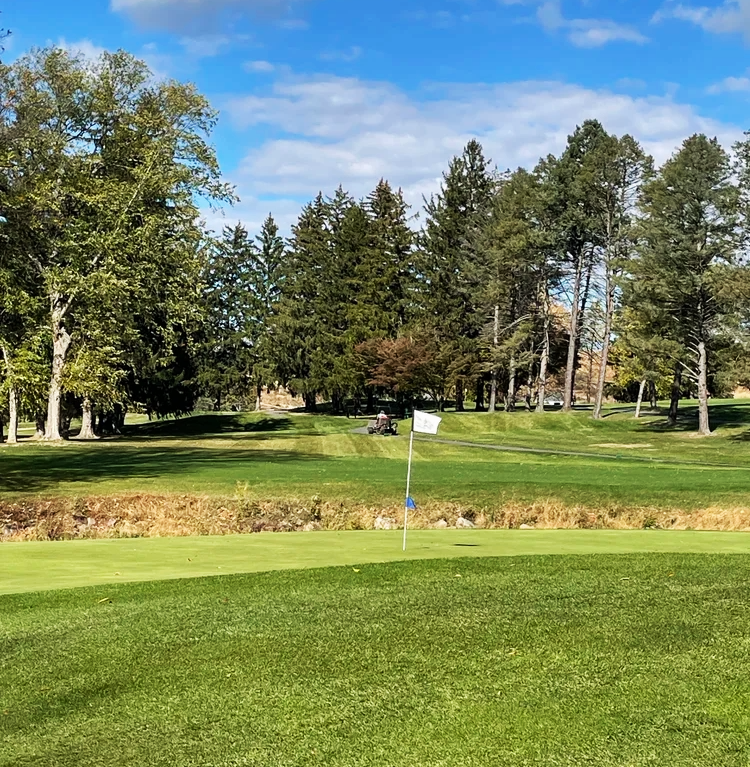
The first of two, back-to-back par fives, the 14th is just 520 yards in length and can be reached in two, as long as you dissect the fairway. The tee ball is played uphill to the right-to-left sloping landing area. Two traps down the right need to be avoided, as well as the stand of trees down the left. If laying up, you’ll need to avoid the two bunkers down the right and one left, as this will set up a relatively easy third shot to a back-to-front sloping green. Three bunkers sit well below the putting surface, making for a difficult up and down. No question, this is a definite birdie opportunity.
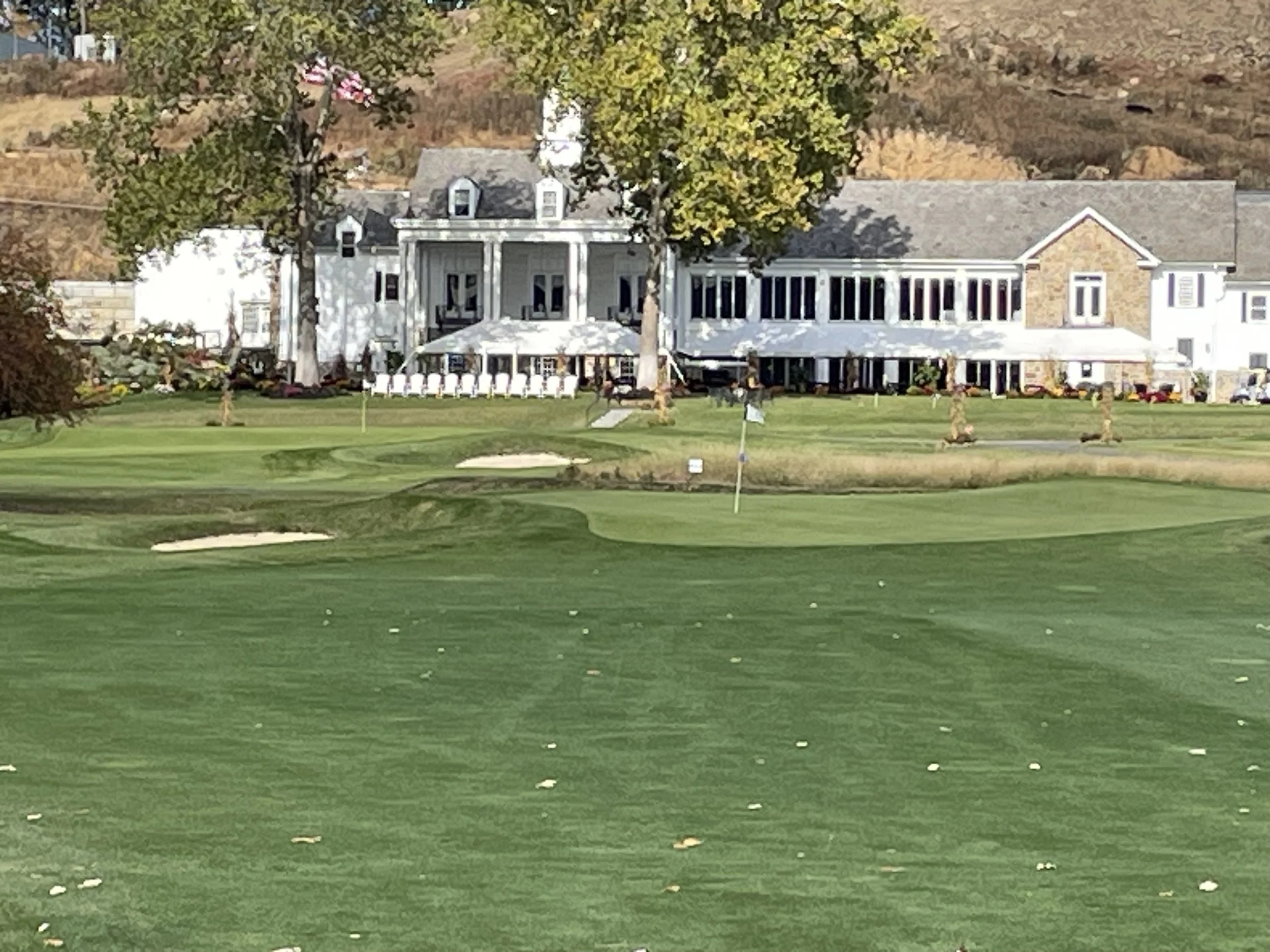
Fifteen is certainly a risk-reward par five, as it stands only 489 yards in length. Bending slightly to the left, this hole can be had with a successful tee ball down the center of the fairway. Trees guard the left side of the fairway, while thick rough is right. A fairway metal or long iron should remain to reach the green in two. A word of caution, your approach must clear the fronting creek that looms 15 yards short. If you’re laying up, you need to avoid the pair of bunkers down the left of the landing area. The green is wide open, with little trouble and features one of the softest sloping surfaces at the Steel Club.

The longest par three on the course, the 16th stretches 235 yards from the back buttons. Not only is this the furthest of the one-shotters, but it also plays uphill to a severely sloping, left to right and back-to-front green. Two deep bunkers, both on the right side make for an incredibly difficult up and down, especially with a back-left pin. Make par here and you pick up at least one against your opponent.

The closing two holes are rated fourth and second most difficult on the course respectively. Although just 406 yards in length, the 17th is a sharp, dogleg right par four. A left-to-right shot is the best shape off the tee, crossing the meandering creek and avoiding the tall tree down the right. A quality tee shot will leave a short iron approach to a fairly small putting surface that slopes left-to-right and back to front. Closely mown chipping areas and a bunker right protect the green. Play short of the green, as shots will bound towards the hole.
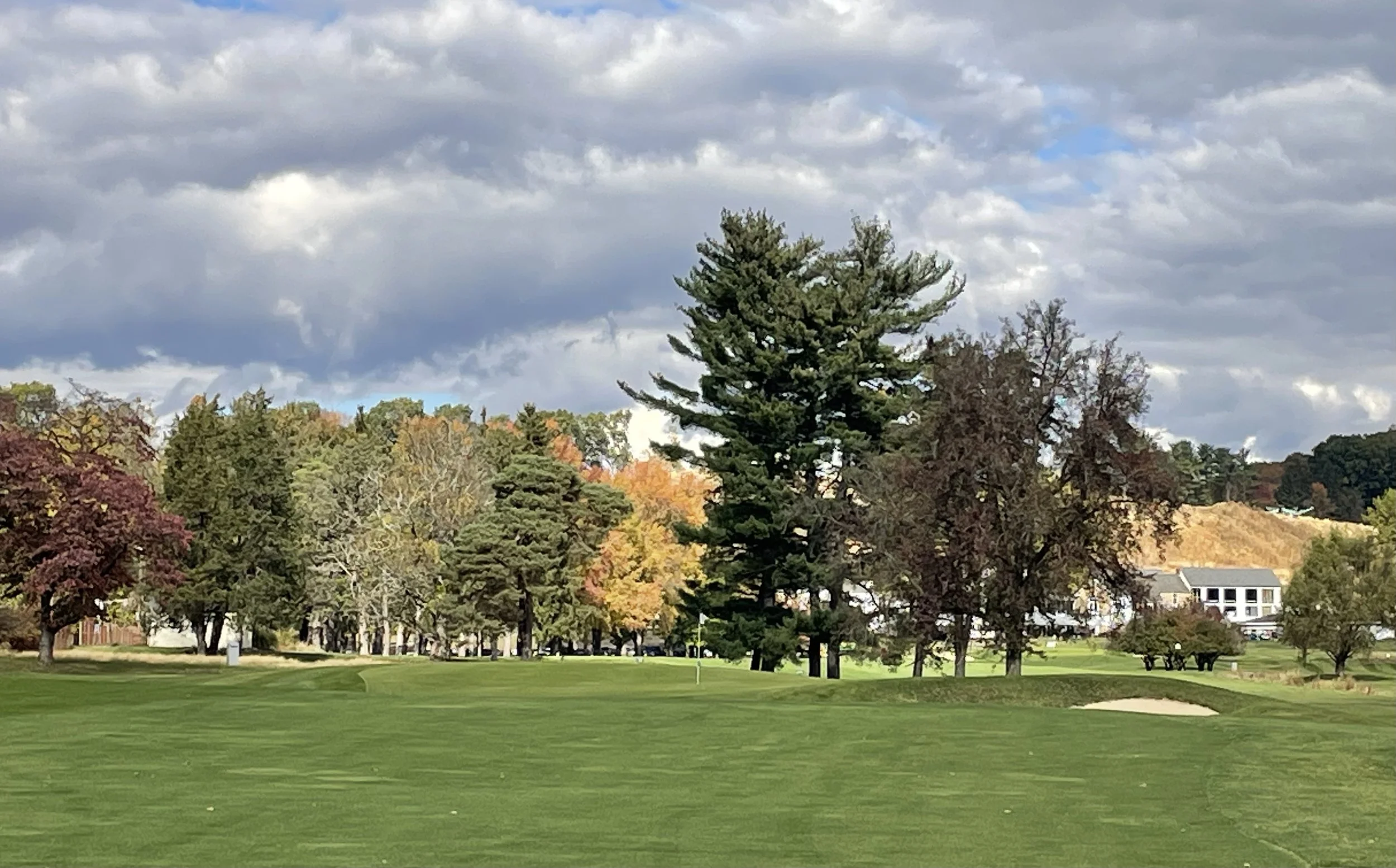
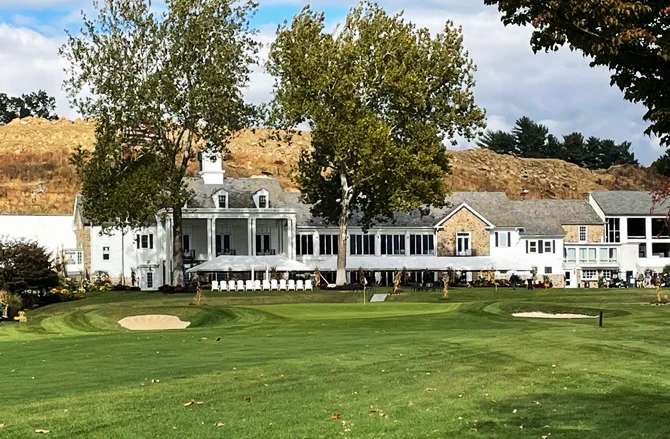
The second most difficult hole on the course, the 18th is a long, 467-yard par four, that bends from left to right. Although the fairway is fairly wide open, any shot missing right can find the creek or a group of trees. Devoid of fairway sand, the best play is down the left side, as the landing area slopes from left to right on this uphill tee ball. Your approach with a long iron or fairway metal must negotiate the narrow opening that features bunkers on either side of the green. The two-tiered, long green is as slick as any on the course and is pinched in the front by sand. A back-pin and a short approach will most likely result in three putts.
OVERALL: If you have the opportunity to play the Steel Club, by all means, make it happen.
As it is with most golf courses, pick the right tees to play from. The Steel Club offers six sets of tees, ranging from 3,973 yards to a robust 6,997 yards. With all of the hills and slopes, the course plays longer than the yardage indicates.
In my estimation, the Steel Club is a hidden gem that flies mostly under the radar of most golf enthusiasts.
Let’s start off with the conditions. You’ll be hard-pressed to find another course in the region that’s in better shape from tee through green. Immaculate fairways, well-groomed bunkers and slick and undulating putting surfaces.
The practice facility features a large teeing area, complete with a chipping green and deep bunker to practice those difficult trap shots. The original bowling alley has been changed into golfers paradise, complete with five hitting stations, a putting green and a TrackMan Golf Simulator with over 120 courses. In addition, just off the 17th green is a chipping area and a 100-yard short-game practice area.
The membership opportunities are endless. From the Full Golf membership, with a very reasonable initiation fee to the Limited Family Golf membership, that features 25 full rounds per household, to the Social Membership, that has a small initiation fee. In addition, there is a clubhouse and a dining membership with no initiation fees. So the options are quite reasonable. “We are right around 500 total golfers for our membership, the healthiest the club has been in a while,” continued Chlebek.
“We have three different categories for full membership,” added Chlebek. “Based off age, 19-35, 36-40 and 40 and over, which gives full access with different dues levels.”
Speaking of dining. The food at the Steel Club is outstanding. Whether you start off with a crock of the smoked brisket chili or a main entree of bourbon garlic strip, you won’t be disappointed. After a weekend round of golf, meet in the BeamYard Bar for a cold beverage to watch your favorite sports team on the many flat screens or just rehash your recent round.
“The dining membership has over 10,000 members and there is no charge for this membership,” Chlebek continued. “We hold a credit card; you fill out a form and at the end of the month we charge your card. So, the restaurant is busy all year round.”
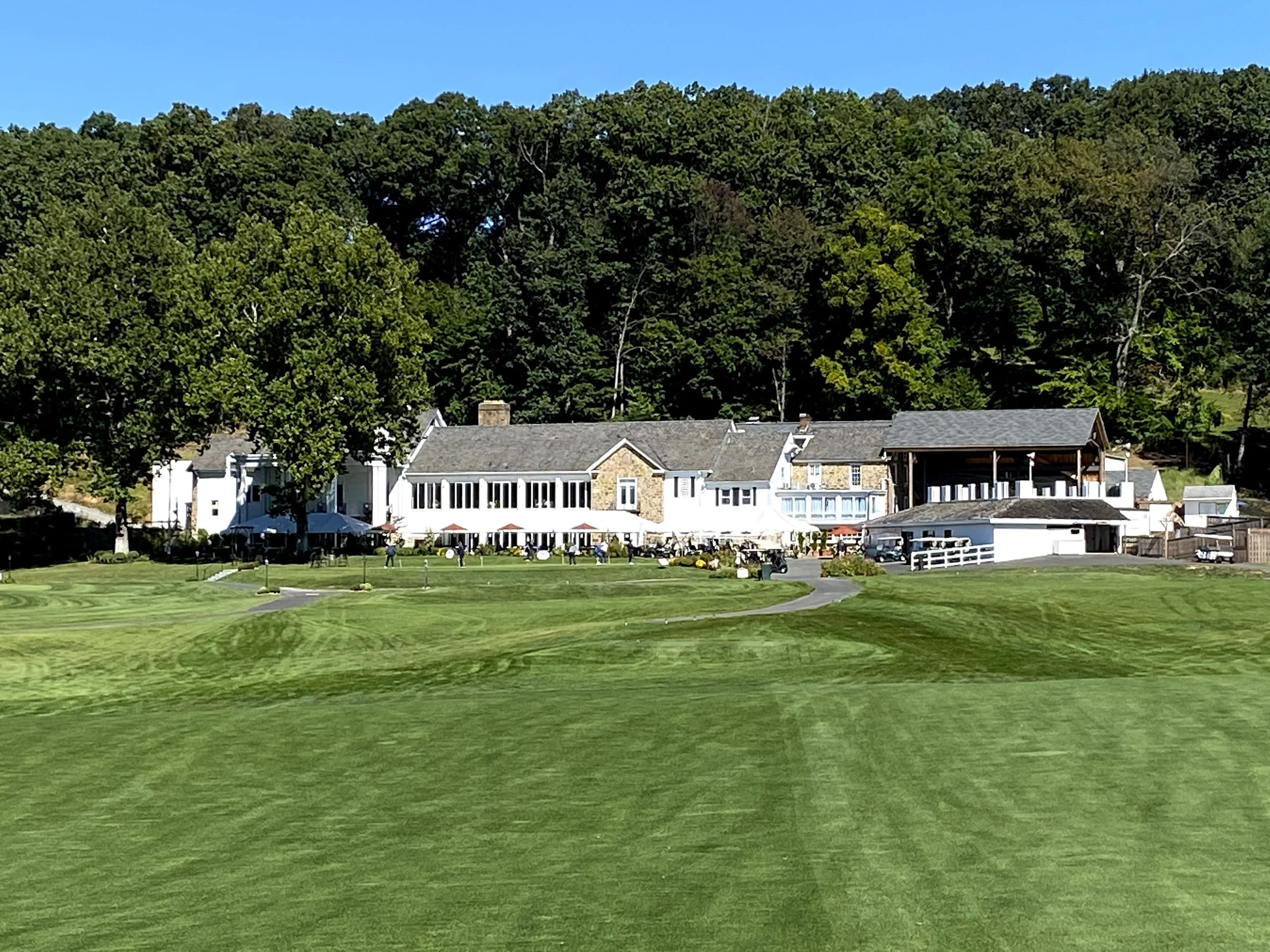
The best spot during those summer months and early fall has to be the patio, overlooking the 18th hole, as you relax with a post-round drink or a quick bite.
Yes, there is an Olympic sized swimming pool and tennis court usage at Lehigh University, but the real star is the golf course. The fact that this was one of the last courses that Donald Ross designed should tell you something. Ross was a genius architect. Just think about it. Pinehurst No. 2, Oak Hill, Oakland Hills, Inverness, East Lake and Seminole, just to name a few, all of which are ranked in the top-100 of the greatest courses in the country.
“Since I’ve been here, the club itself is a unique place,” added Chlebek. “The golf course is awesome, and it changes daily depending on where you put the pins. One day you’ll find that the hole you’re on is seemingly a birdie chance and the next day you have trouble making par. If you miss in some wrong spots, you’ll have trouble making par. I think for the everyday member, that’s what great about the Steel Club. We have members that play it 4-5 times a week because it’s so different every day. That’s what makes it such a unique place. It has a little bit of everything for everybody. Any of the PGA or local professionals that come out and play, they all feel like this is kind of a cool hidden gem.”
The bottom line. The Steel Club is a must-play!