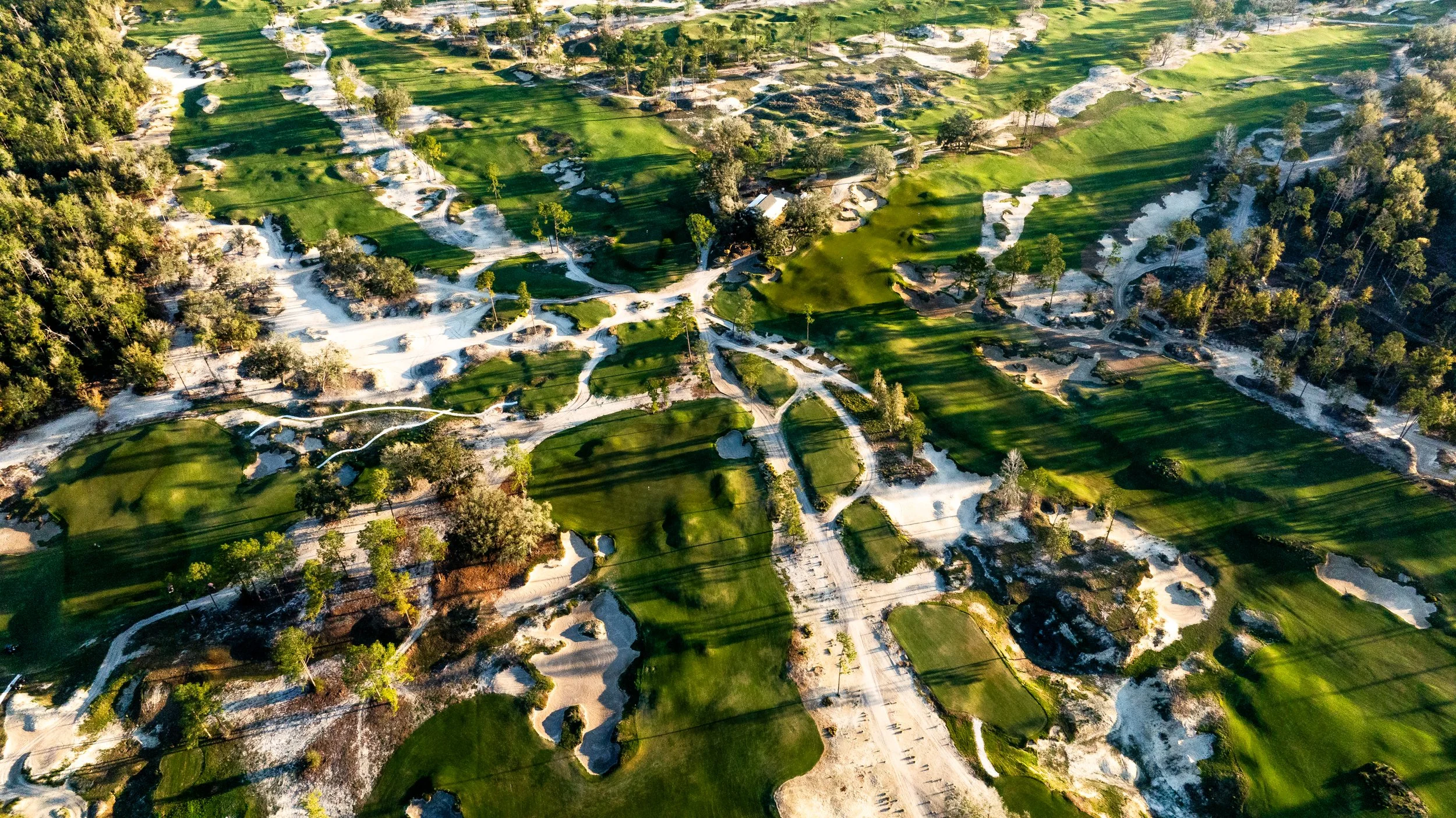
CABOT CITRUS FARMS (KAROO COURSE)
Course Architect: Kyle Franz
Year Opened: 2024
Location: Brooksville, Florida
Slope: 142. Rating: 75.7
Par: 72
Yardage: 7,562
Hole-by-Hole: 1 - Par 4 475 Yds 10 - Par 3 242 Yds
2 - Par 4 522 Yds 11 - Par 4 427 Yds
3 - Par 3 292 Yds 12 - Par 4 496 Yds
4 - Par 5 511 Yds 13 - Par 4 447 Yds
5 - Par 4 382 Yds 14 - Par 5 581 Yds
6 - Par 5 563 Yds 15 - Par 4 388 Yds
7 - Par 3 199 Yds 16 - Par 3 201 Yds
8 - Par 4 426 Yds 17 - Par 5 500 Yds
9 - Par 4 421 Yds 18 - Par 4 489 Yds
Par 36 3,791 Yds Par 36 3,771 Yds
Awards Won: #2 Best New Course by Golf Digest (2025),
#32 Top 100 Courses You Can Play by Golf Magazine (2024),
#42 Top 200 Resort Courses by Golf Week (2025),
#59 Top 200 Residential Courses by Golf Week (2025),
Top New Course/Renovation for 2025 by Sports Illustrated.
Website: cabot.com/citrusfarms/
HISTORY: The golf chronology of this wonderful piece of property dates back to 1991, when World Woods Golf Club opened for play. Two outstanding golf courses, crafted by the one and only, Tom Fazio, graced the land.
Pine Barrens and Rolling Oaks golf courses opened with great fanfare, as both layouts were rated as 4 1/2 stars by Golf Digest. In fact, the Pine Barrens course, which many thought was reminiscent of the famed Pine Valley Golf Club, was ranked in America’s top 100 venues by many publications.
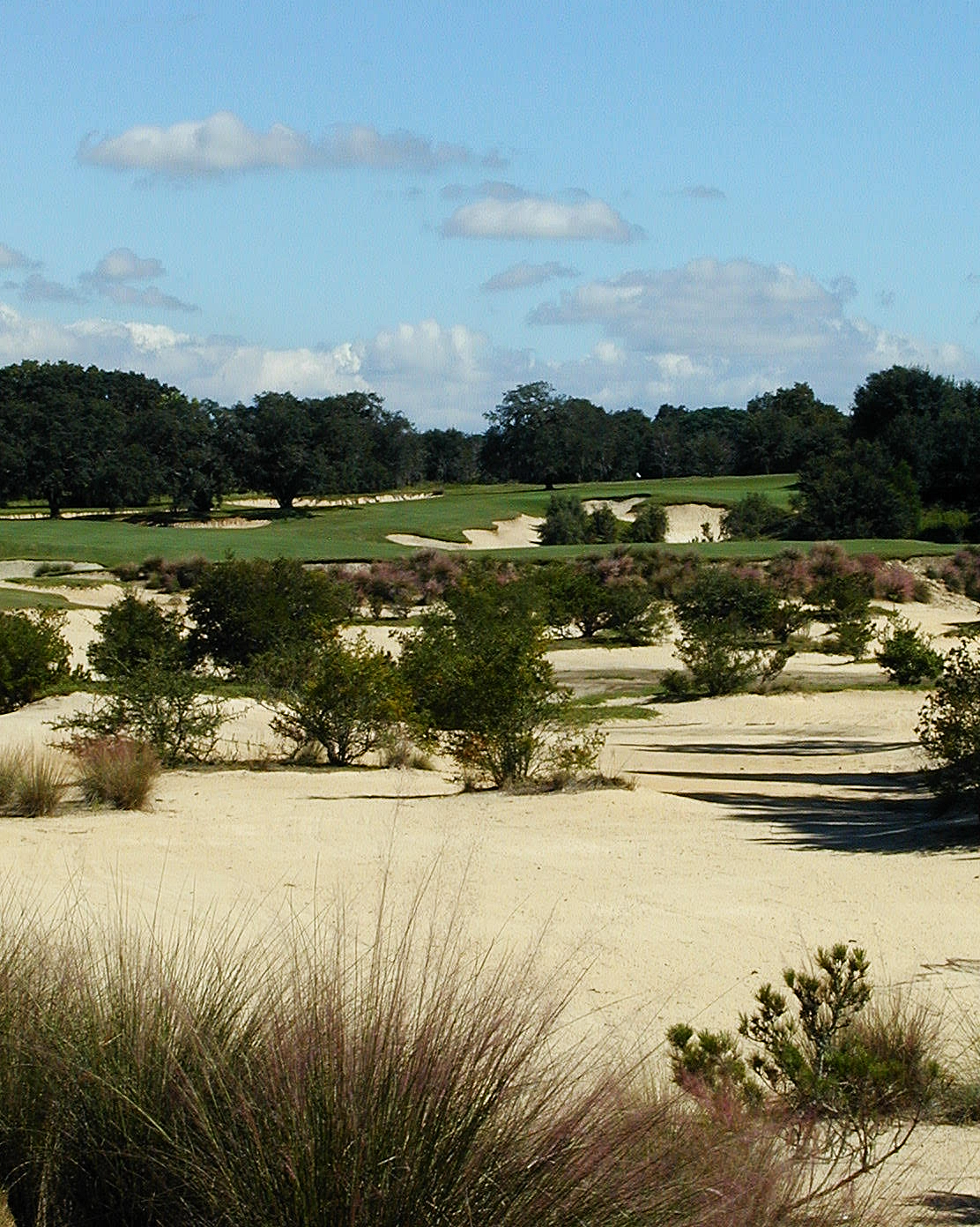
World Woods circa 1999
Not only did World Woods boast two top-ranked golf courses, but it was also home to a 22-acre, four-sided driving range, 2.2-acre putting course, a three-hole practice course and a nine-hole executive course. The Pines Barrens course was a par-71 layout at 6,900 yards. A far cry of what it is today at 7,562 and a par-72.
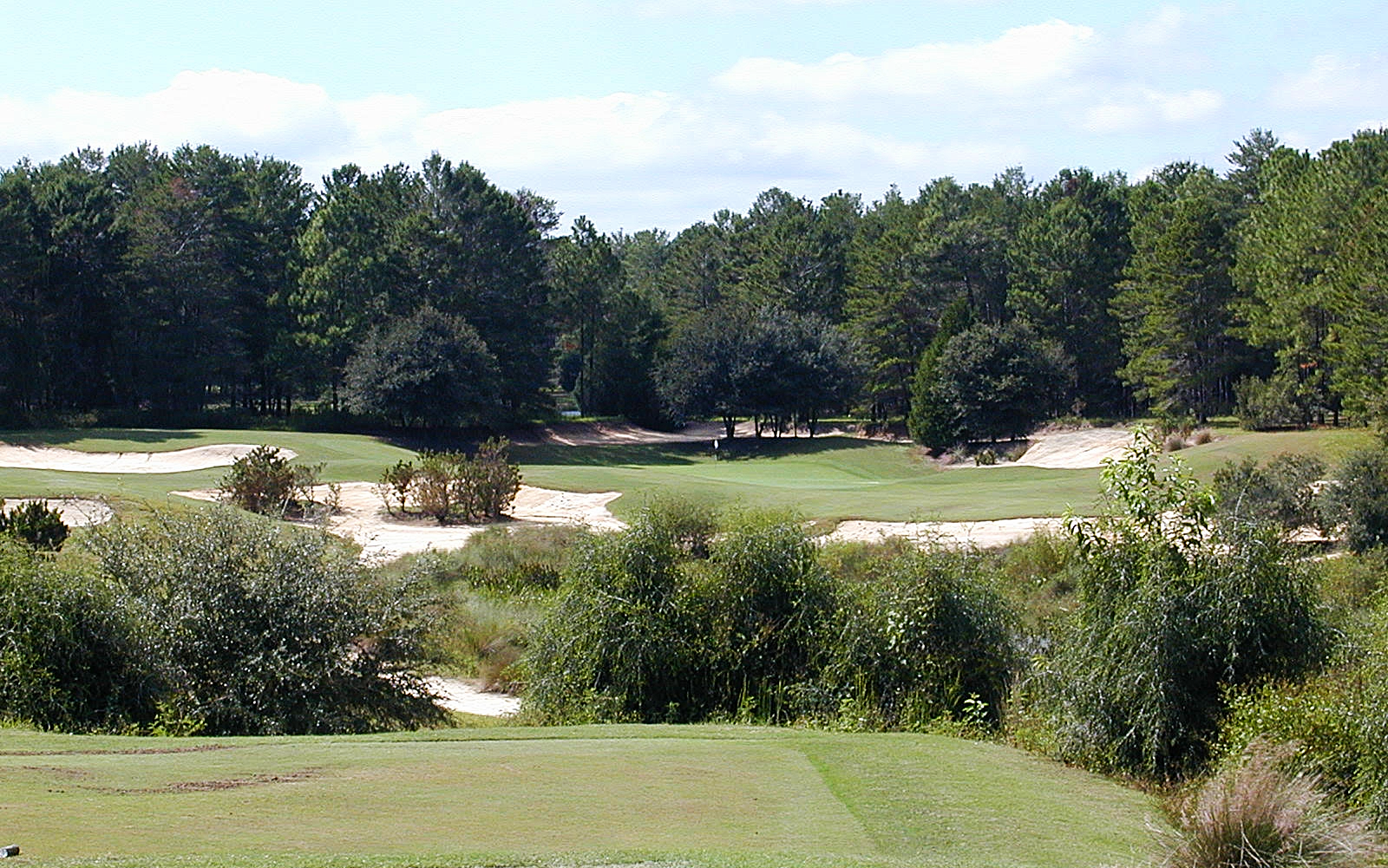
The sand remains, but many of the trees are gone.
Fast forward 30 years and up steps Cabot LLC, based out of Toronto, Ontario, Canada, as they purchase, not only World Woods, but Southern Woods Golf Club and Sugarmill Woods Country Club as well.
Leading the charge is Cabot CEO and co-founder Ben Cowan-Dewar along with partner Mike Keiser of Bandon Dunes fame.
“We are excited to build upon the amazing legacy established at World Woods and forge a new path for Cabot Citrus Farms as a vibrant golf and residential community that showcases the Sunshine State’s abundant natural offerings,” said Cowan-Dewar.
“I’ve admired World Woods for many years, added Cowan-Dewar, and started to think about purchasing it in 2015. Like all my ideas it took a long time. We are very pleased to make it Cabot’s first U.S. destination.”
The Cabot brand started in Nova Scotia with the critically acclaimed Cape Breton golf courses. Since then Cabot has added Saint Lucia, Revelstoke, Highlands and Bordeaux, along with their first foray into the United States with Citrus Farms.
“I couldn’t wish for a better location for our first U.S. development,” added Cowan-Dewar. “The property is a nature lover’s paradise that rivals the most spectacular sites I’ve seen across the world. We have always thought that the land is what makes golf so special and we are blessed to have a terrific 1,200 acres to hopefully showcase something exceptional.”
When choosing an architect to craft Karoo, the choice was simple, Kyle Franz. With over 20 years of course design experience, Franz worked with Canadian architect Rod Whitman with the development of Cabot Links in Nova Scotia. In addition, Franz has also worked closely with the top architects of the day, Tom Doak, Gil Hanse and the team of Bill Coore and Ben Crenshaw. In fact, his renovation and restoration of Mid Pines Inn & Golf Club in Pinehurst won an award for renovation of the year by Golf Magazine. Franz also had his hand in the development of the 2016 Olympic course in Rio de Janeiro for Hanse Golf Design. To say that the Karoo Course was in good hands, is an understatement.
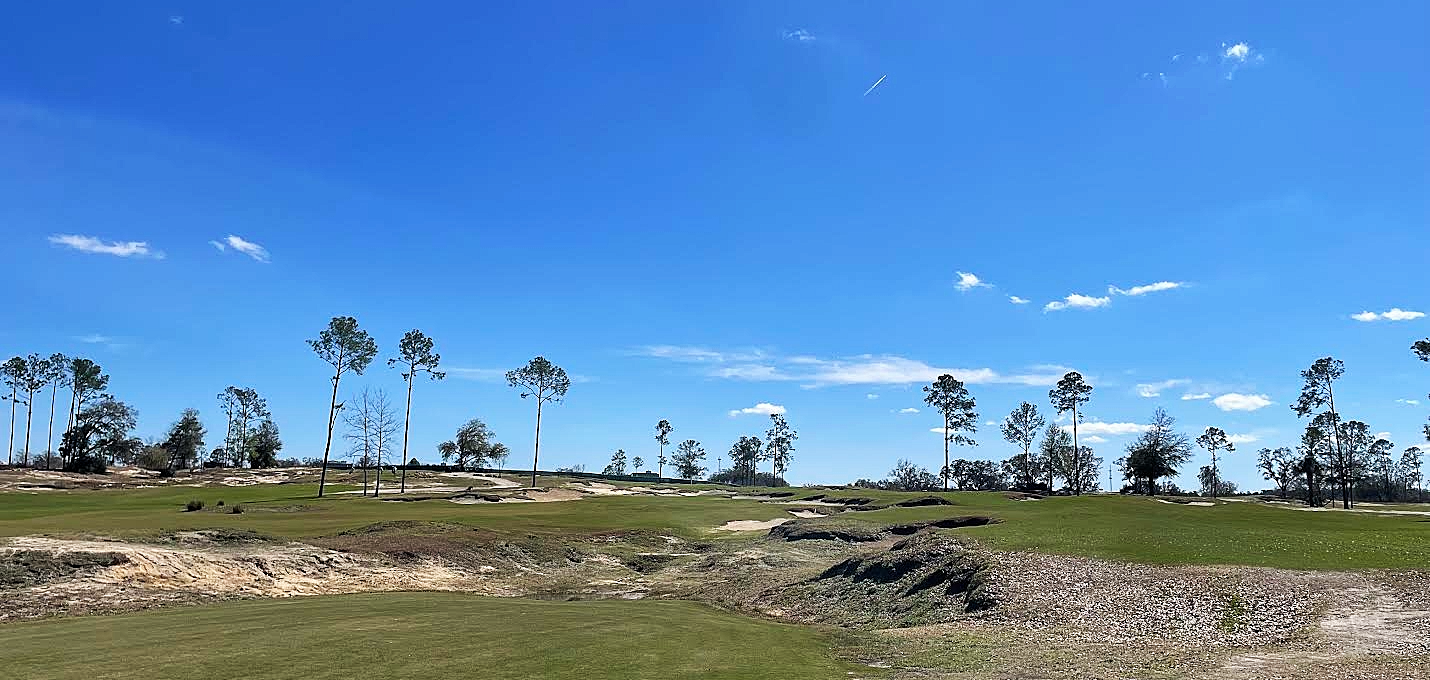
Franz transformed a really good layout to one of the finest resort courses in the United States. Rolling, generous fairways with rugged waste areas, bold and breathtaking bunkers and green contours that will keep any player guessing.
The course itself is named after the Sandhill Cranes which populate the golf course and make a sound that is described as a rolling karoo.
Cabot didn’t stop with just the Karoo Course. They added another stellar 18 hole venue, the Roost Course, crafted by Franz, Ran Morrissett, Rod Whitman and Mike Nuzzo. In addition, the Squeeze offers 10 holes of fun golf that features holes from 100 yards up to 550 yards and finally the Wedge, a par-3, 11-hole course.
This resort is more than just golf. The Village at Cabot Citrus Farms when all is said and done, will feature 30 two-bedroom cottages, 14 four-bedroom cottages and five fairway homes, with additional homesites to be sold. In addition, there will be plenty of dining options for resort guests and homeowners. Within a couple of years, Phase 1 is completely sold out, that’s 36 2 and 4-bedroom cottages.
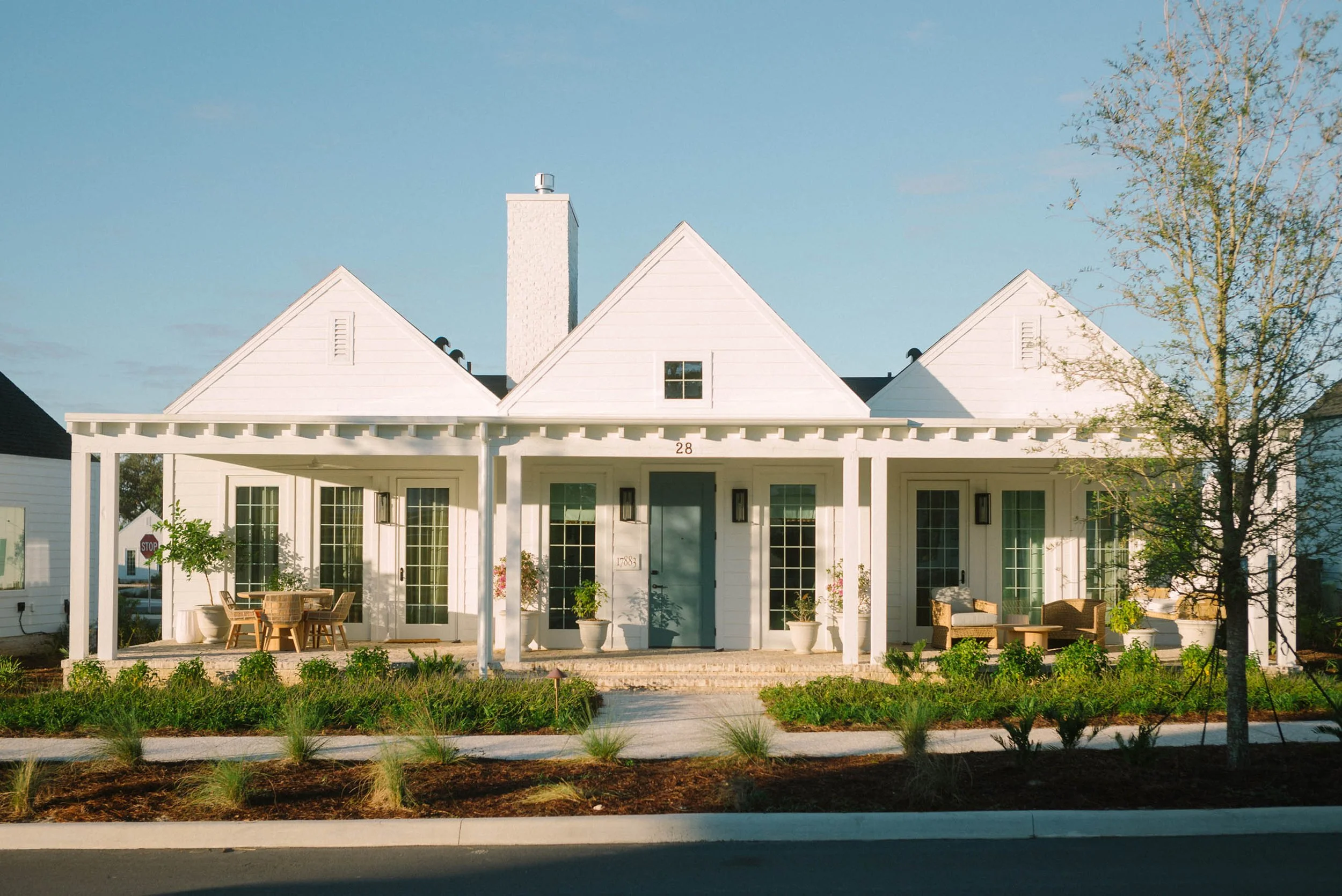
Courtesy of Cabot Citrus Farms
COURSE ANALYSIS: One thing you’ll notice while playing the Karoo Course is that you need to be sharp off the tee, miss the greens on the correct sides and have a great sand game. This becomes quite evident on the first hole, one of seven 400-yard plus par fours on the golf course. Playing from an elevated tee, the prudent tee ball should be down the right side, especially when the flag is on the left side, thus avoiding the two massive bunkers in the landing area. A medium to long iron remains to the largest green on the course, as it joins the sixth hole, making it 100 yards in width. A back-left pin will be the most difficult to attack, so stay right for your best shot at par.
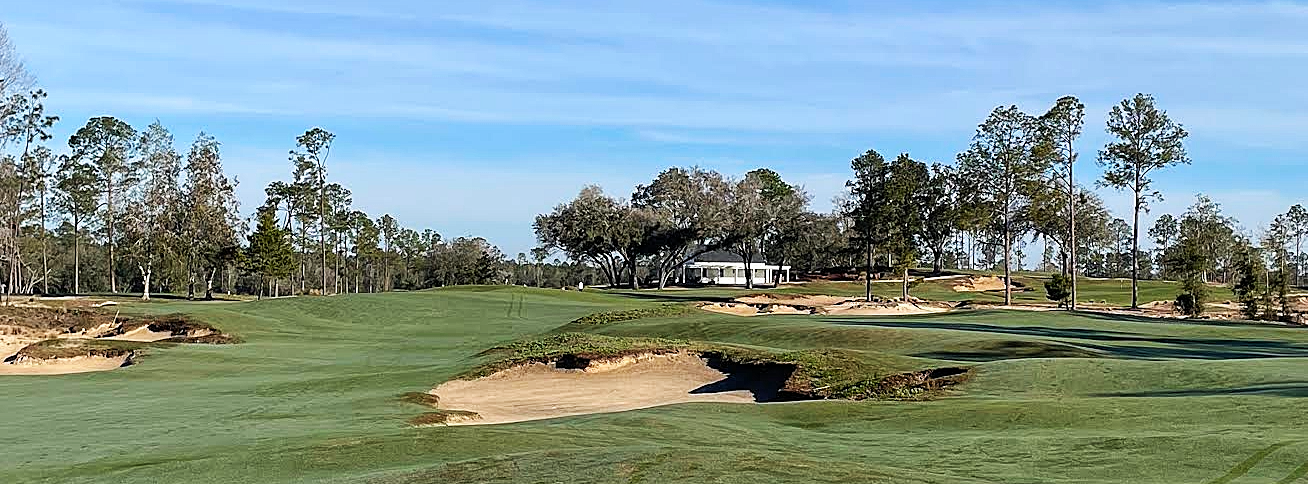
The second hole is a massive par four reaching 522 yards from the black markers. Sand adorns both sides of the generous landing area and must be avoided to have any chance of getting home in regulation. The fairway slopes from right to left, so play down the right side for safety. A long iron or fairway metal will be needed to reach the green. The putting surfaces is quite large at 50 paces in depth, with five bunkers front and left, so if you’re apprehensive about attacking this green, feel free to bail out right, which will give you your best shot at saving par.
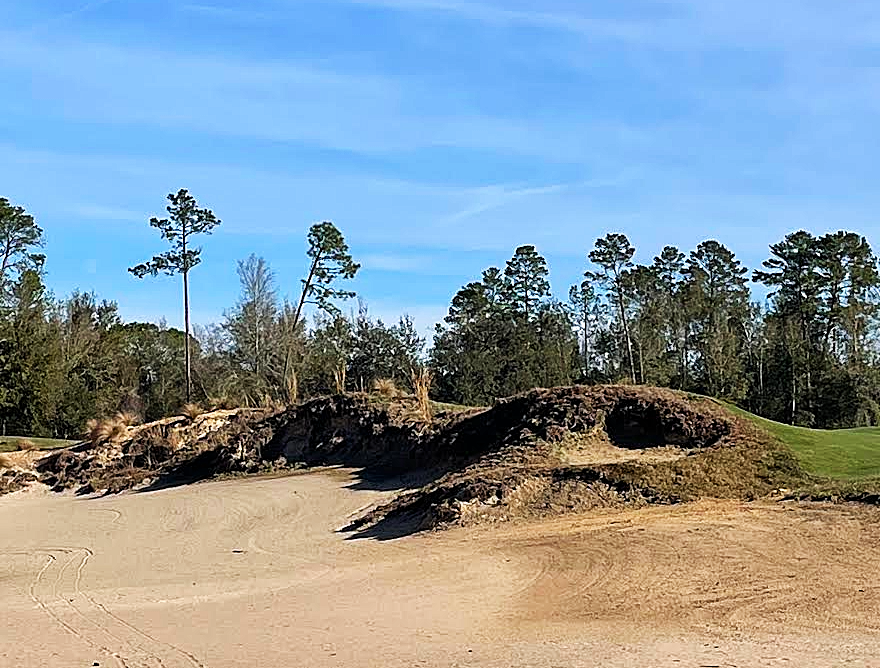
The hardest hole on the course is number three, a 292 yard par three, which features the longest green on the course at 63 yards! Once again, sand protects the left, as well as deep. Missing right and your ball will funnel down towards the bowl-shaped putting surface. A back pin will be next to impossible to get close to, so play to the center and trust your flat stick.
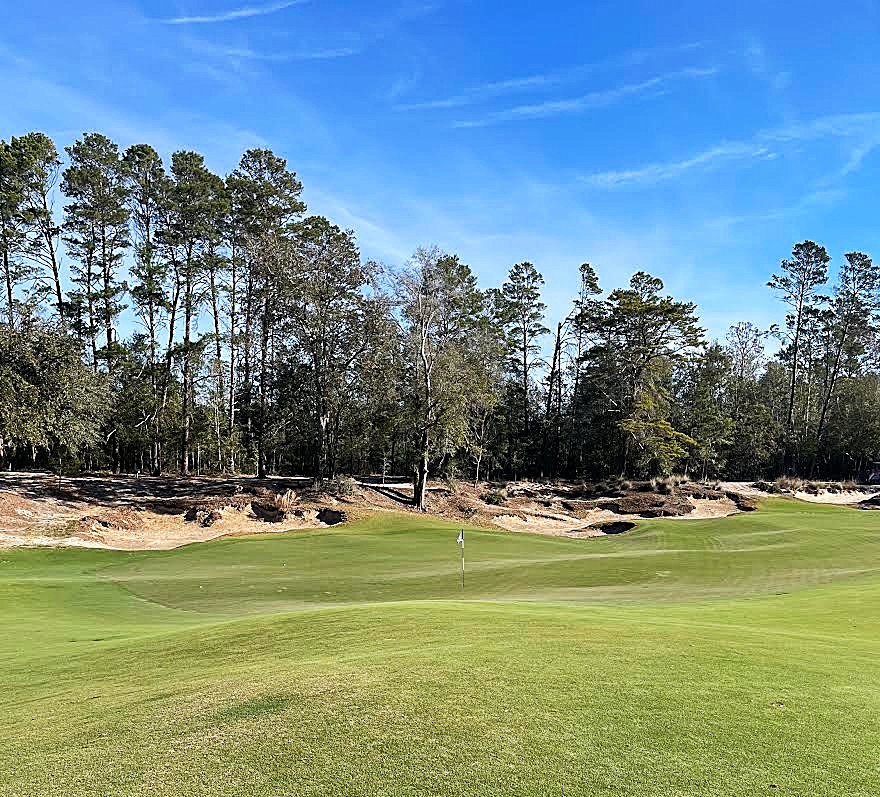
One of the easier holes on the course, the par-5 fourth is just 511 yards from the tips. It features a split fairway with a myriad of sand down the center. A quality tee ball will leave the player with an opportunity to get home in two. The slightly elevated green is another massive one at 54 paces, with sand fronting the right portion. A back-right pin can make this hole quite difficult, but it can be had.
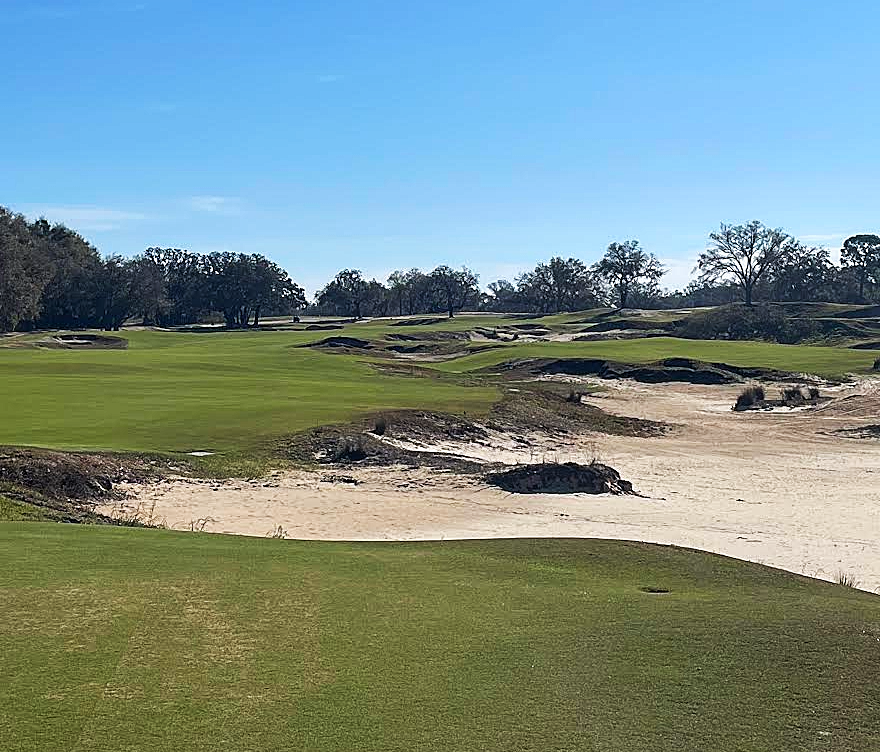
Hole five is a wonderful, uphill par four of just 382 yards. The key is negotiating the tee shot, avoiding the lengthy bunker down the center of the landing area. From there, you’re left with an uphill approach to one of the smallest greens on the course. Although the surface is quite wide, you must be quite accurate with your approach. When in doubt miss long, as all the trouble is short. As you’ve probably found out, missing the putting surface on the wrong side will lead to bogies or worse on the Karoo.
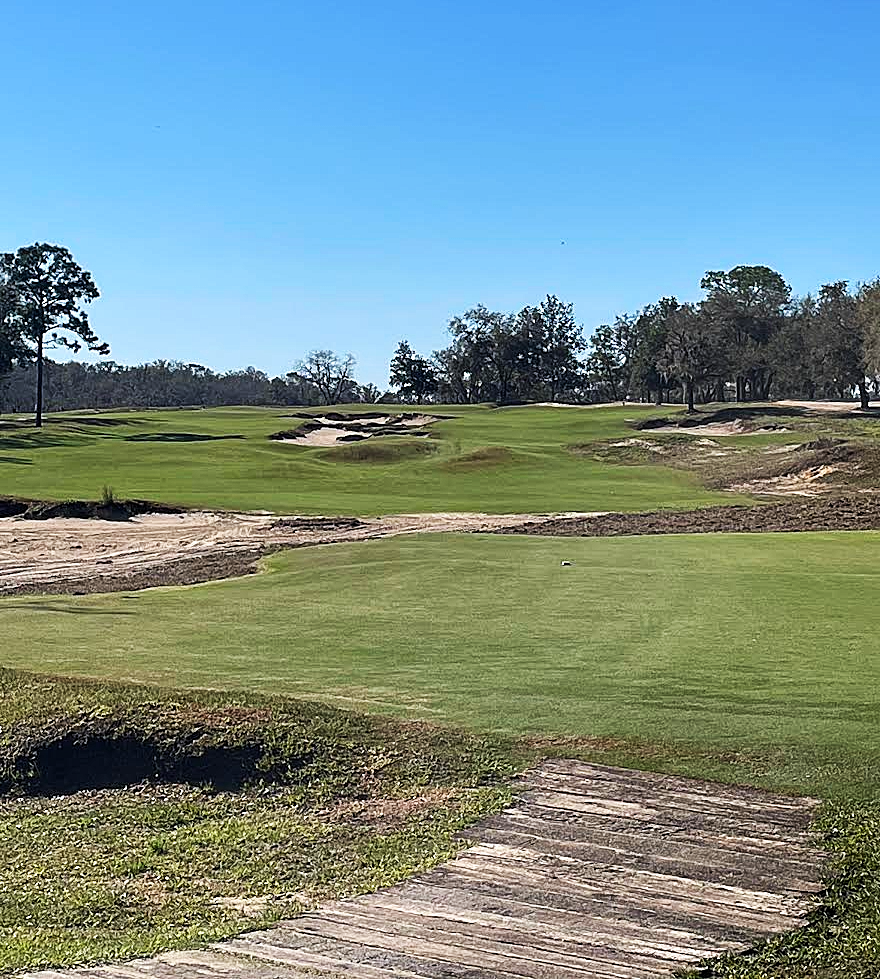
The second longest hole on the course, the par-5 sixth can be stretched to 563 yards. Again, sand will play an important role, as you need to avoid the crossing bunker off the tee. The landing area for your approach is quite generous, which will leave a simple uphill approach to an extremely large putting surface. Slope left and sand on both sides will pinch a front flag, but one you can take advantage of. A back flag can play havoc with your club selection, as the green is enormous.
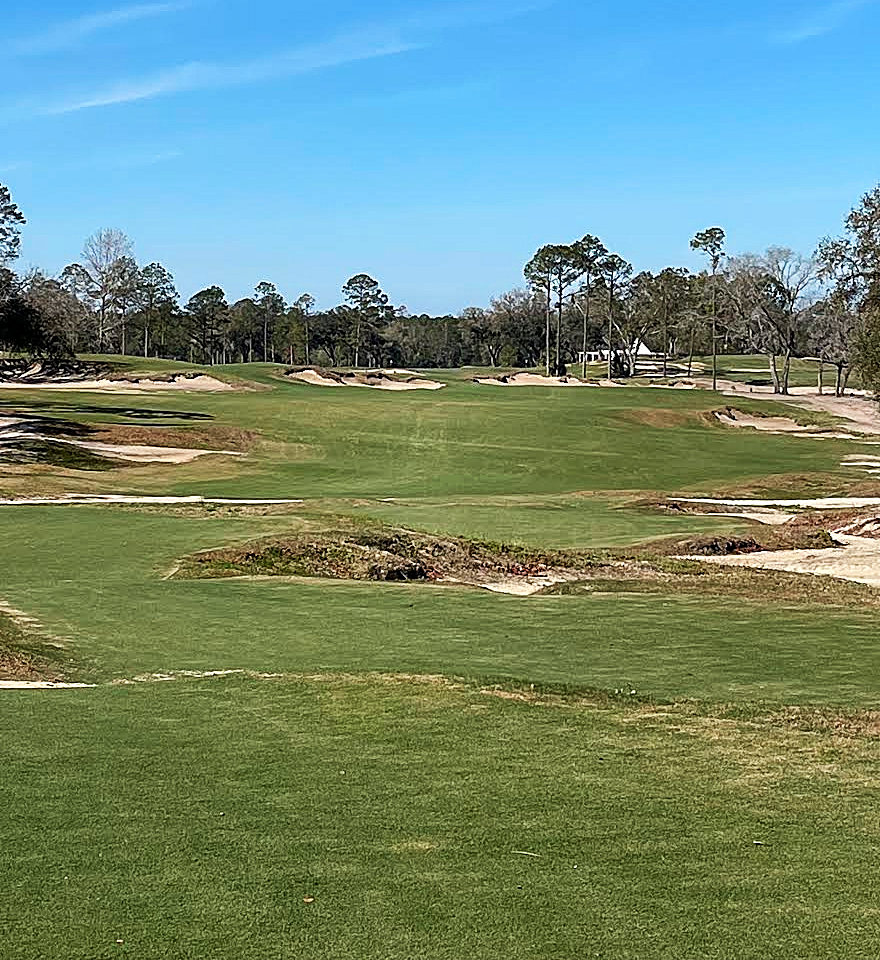
The beautiful seventh is a wonderful par three, just under 200 yards in length. Sand short of the putting surface will gobble up any mishit, while too much club will roll off and down an embankment or worse, into sand. The green is very shallow in depth, but quite wide, featuring a three-foot deep swale. I’m sure by now that you figured out that the par threes on the Karoo are quite difficult.
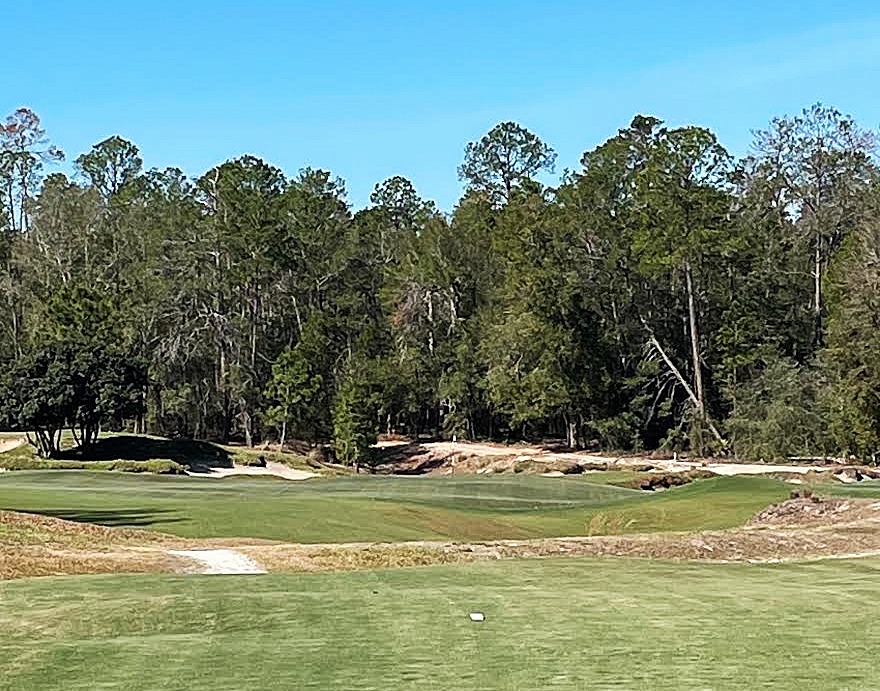
Number eight is a sensational par four, that features a fairway that slopes to the right, with a fairway bunker down the center. A short to medium iron remains to a boomerang shaped green with plenty of guarding sand. Stay left to play safe, but a front-right pin to the slender strip will certainly test your skill.
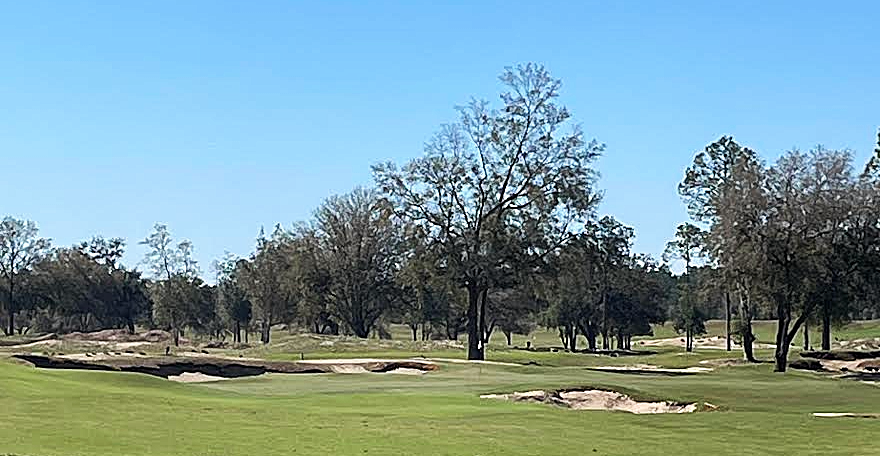
The closing hole on the outward nine is one of the most difficult on the course, although just 421 yards in length. The landing area off the tee is quite generous as it plays downhill, however your approach is uphill to the green, with plenty of slope. Miss short and your approach will come back towards the fairway. Miss right and you’ll find sand, as you will long.
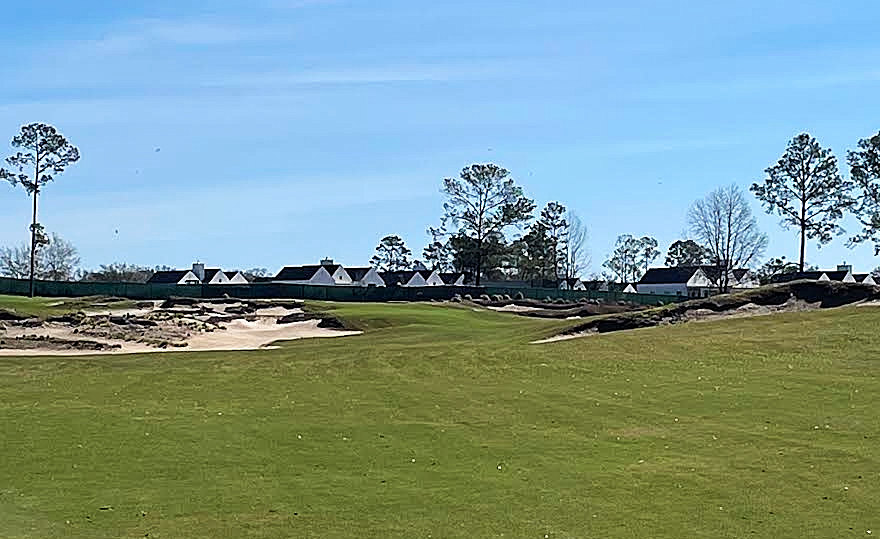
The back nine opens with the longest par three on the course, 242 yards in length. The putting surface is quite generous and slopes from right to left. Bunkers protect the left side, so play right to avoid the trouble. Missing right will leave a straight-forward pitch in your effort to save par.
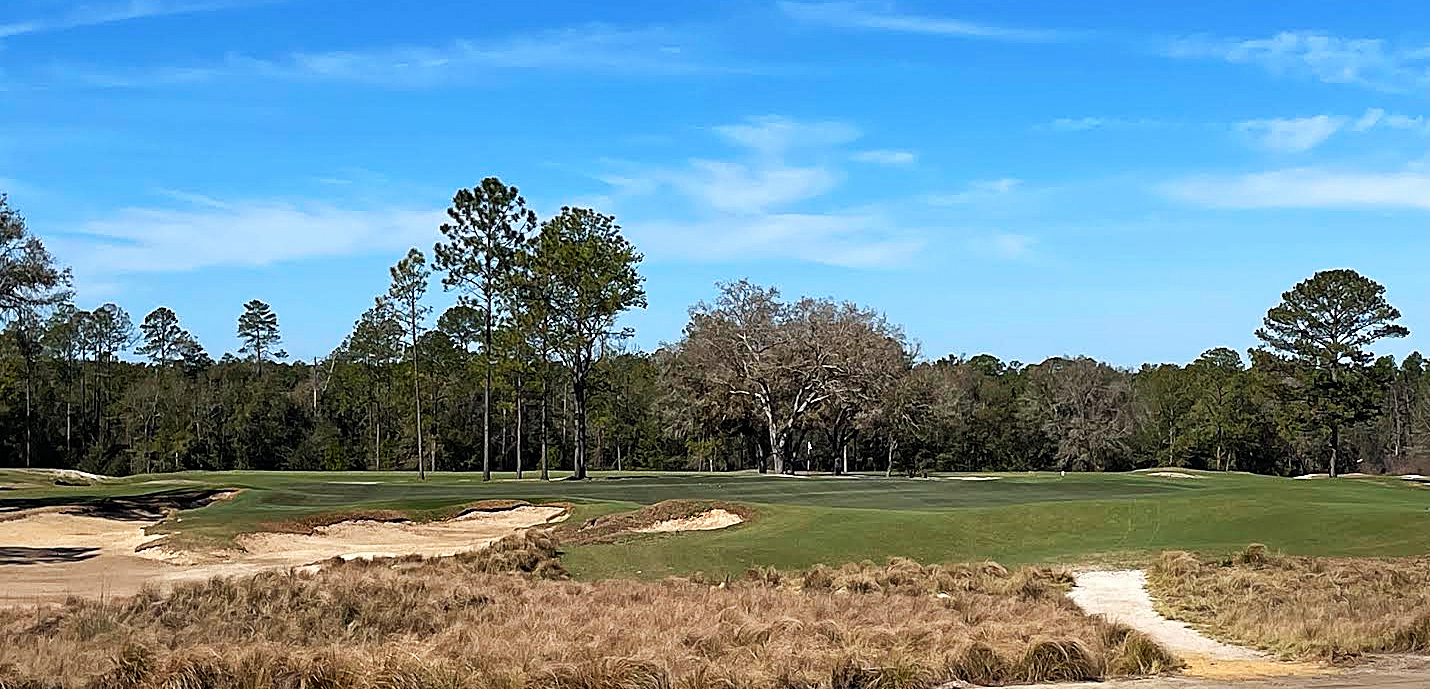
The 11th is a straightaway par four with a split fairway. A myriad of sand guards the landing area that slopes from right to left. A shorter approach will remain if your tee ball favors the tighter, right side. Is the putting surface is massive with sand left and right and mounding short of the green. At 52 paces in depth, the green can feed your approach hard to the left so plan accordingly with your approach.
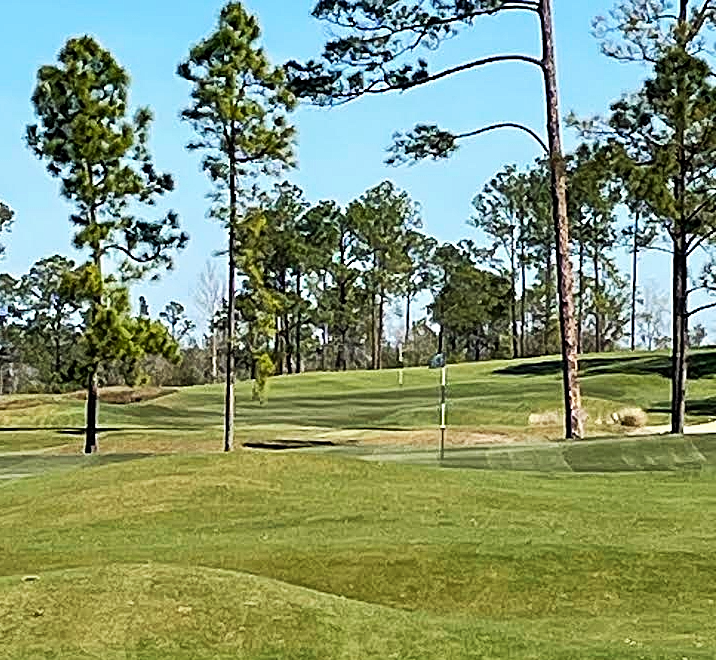
At 496 yards in length, the par four 12th bends slightly to the right off the elevated tee box. Ranked as the fourth most-difficult hole on the course, You’ll need an accurate tee ball, avoiding trees on the right and left. You’ll be left with a long iron or fairway metal to an uphill putting surface. One of the smaller greens on the course at 38 paces, your approach needs to stay below the hole to have any shot at birdie, let alone par. Miss short of the green and your shot will repel back down the fairway.
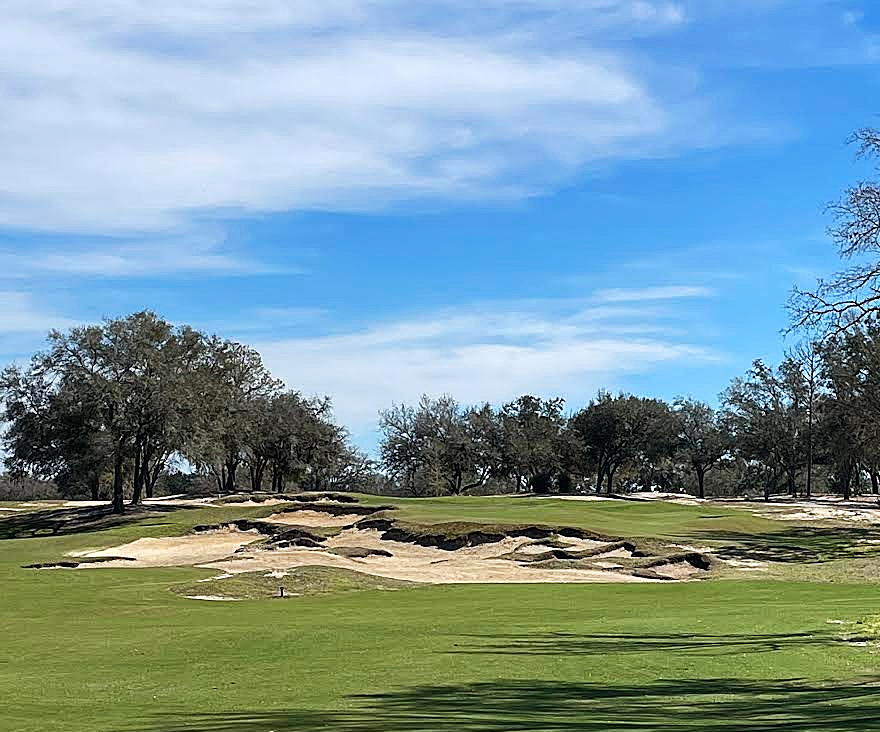
The 13th is a wonderful, dogleg right par four with a rolling, split fairway. Carry the strip of sand down the center of the landing area and you’ll be left with a medium iron to a putting surface that’s the smallest on the course at just 28 paces. Devoid of bunkers, the green features mounding around the surface, which will repel any shot offline. Depending upon the pin placement, this hole, although rated the second most difficult on the course, can be had if your approach is spot on.
Number 14 is a wonderful, dogleg left par five, the longest on the course at 581 yards. A generous fairway awaits, but try and play down the right side to set up your second shot, as trees and sand guard the left. The key here is to leave yourself a short iron approach to the green, so stay left of the central fairway bunkers. You could play towards the right fairway, which leaves a downhill third to another long (49 paces) and narrow putting surface. Stay below the hole for your best shot at birdie.
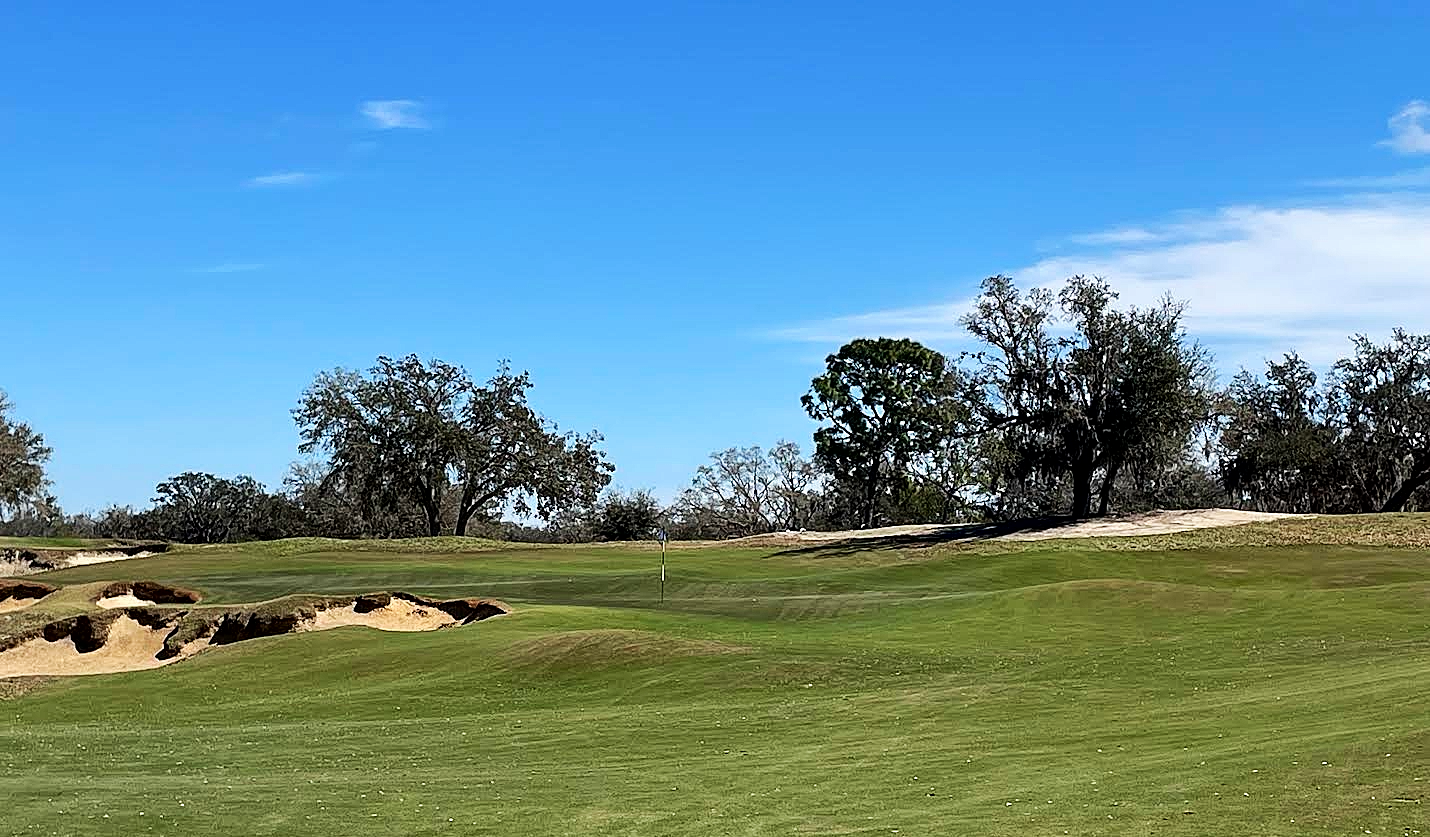
The 15th is a great risk-reward par four. Another split fairway awaits, with the shorter approach to the right, however this is the riskiest, as the landing area is quite tight. Play left to the wide landing area and you’re left with just a short iron or wedge to a fairly small target. The green features plenty of slope and runs from back to front with many pin positions.
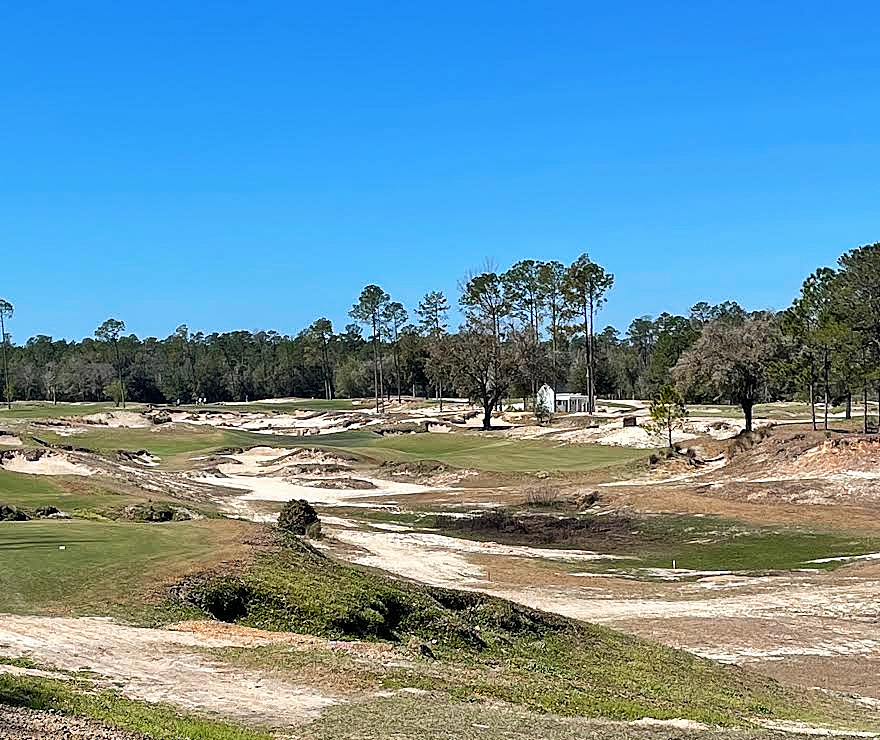
The final par three on the course comes by way of the 16th hole. Although a huge waste area lays in wait short of the green, it should not come into play, as the putting surface is the largest on the course at a whopping 58 paces in depth. The horseshoe shaped green features several levels, in fact, if your approach makes the front portion, you’ll be five feet below the upper section. The key is club selection!
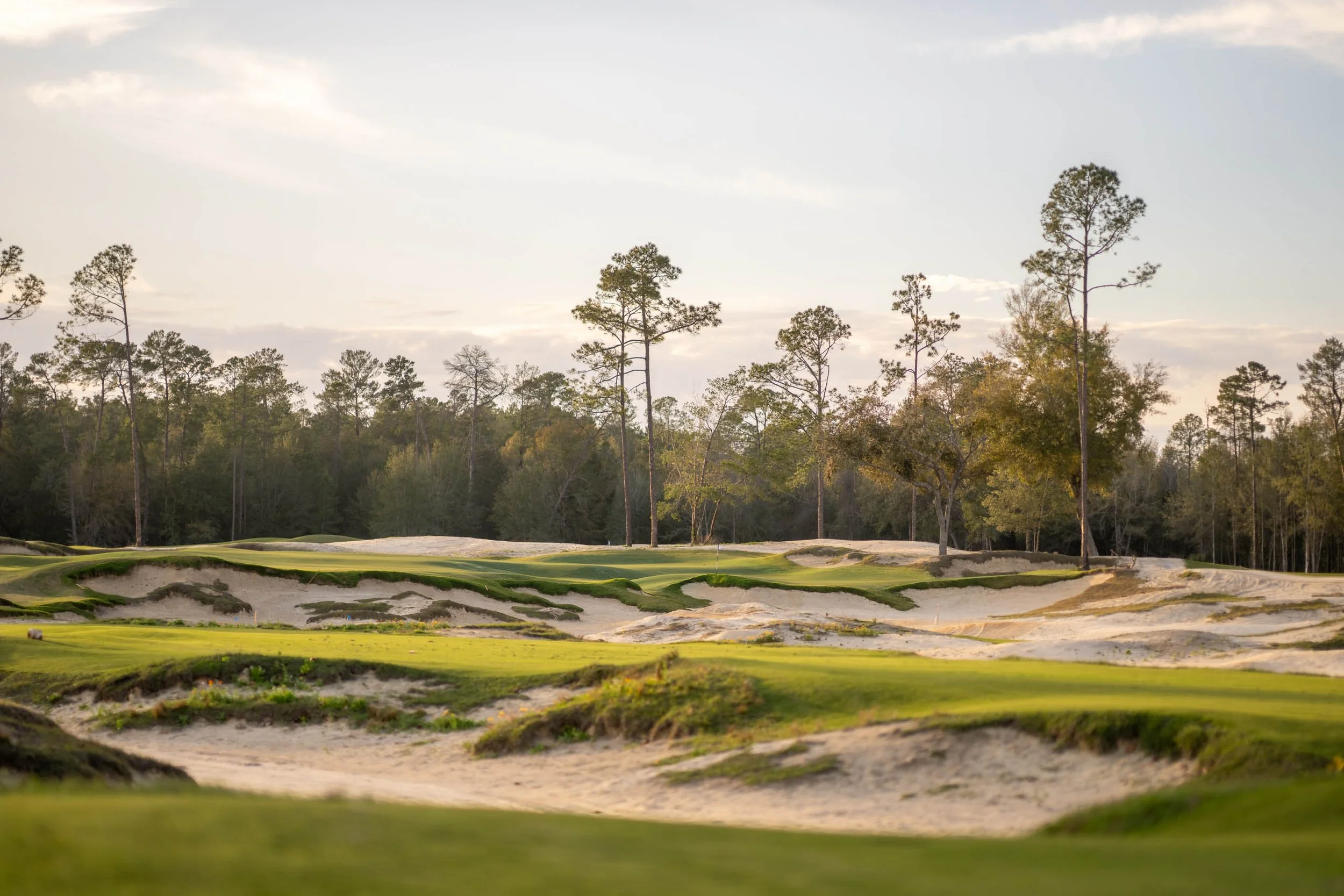
Number 17 is another outstanding par five that plays uphill from tee to green, so don’t be fooled by the 500 yard length. The rolling fairway features a bunker down the left side which must be avoided for your best shot at birdie. Now it’s decision time, left or right of the fairway sand down the middle of the landing area. Right will leave an easier approach, while left will leave a blind third shot to a green that runs from front to back and to the right. Miss right of the pin and your shot will run off the green some 50 yards, so good luck!
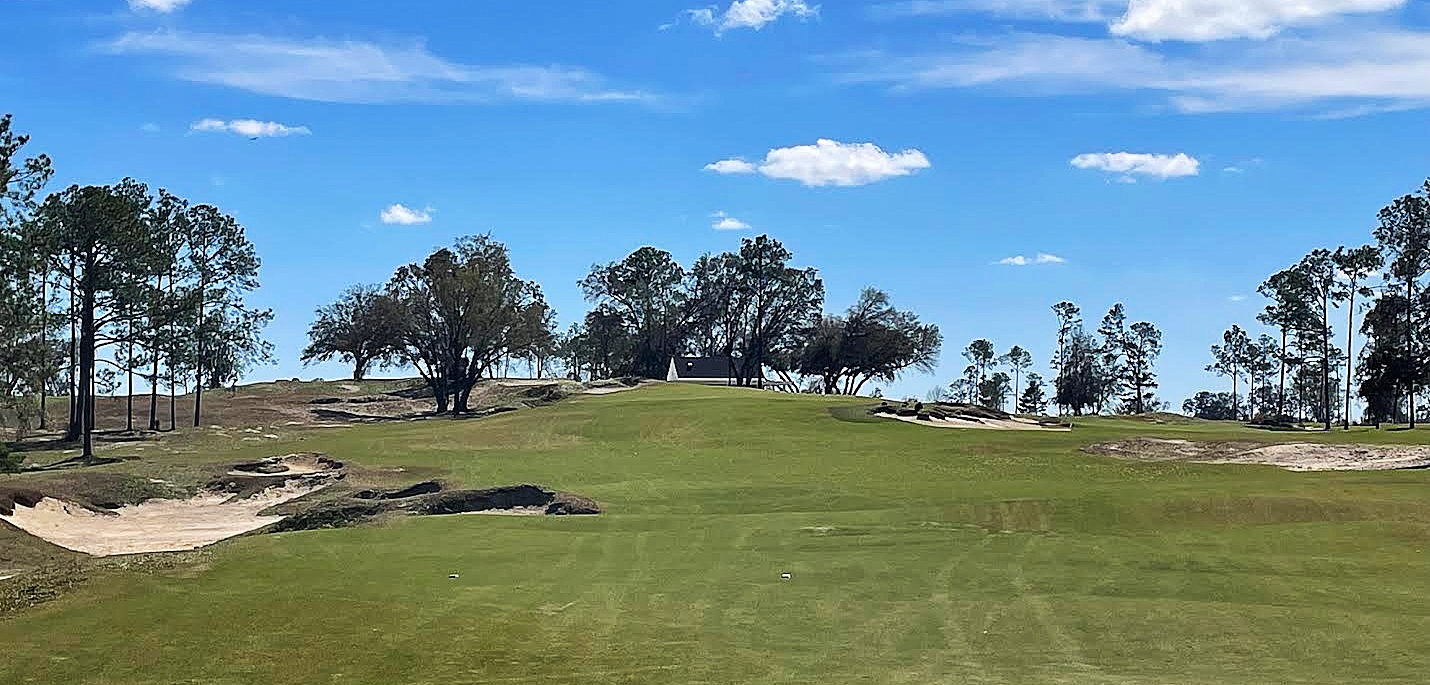
The closing hole is another great par four that also features options. Down the right is the safer play, however it will leave a very long, uphill approach to the green. Down the left narrow fairway will cut off 15-20 yards, but it is riskier. There is a third option of bombing one down the center, avoiding the Y-shaped bunkers. The green is another massive one at 55 paces in depth and equally as wide. One small pot bunker front the putting surface, so stay clear.
FINAL WORD: WOW!
First off, I say this all the time…choose the correct tees. Don’t be a hero. 7,500 is not for the faint at heart, unless you enjoy hitting driver, three-metal and wedge on every par four.
When playing at Cabot Citrus Farms you need to be aware that two years after the courses opened, they are now walking only golf courses. Caddies, fore-caddies and push carts are available. The caddie is certainly the way to go, as they are extremely knowledgeable, especially on the greens and you’ll enjoy your walk down the corridors of each hole.
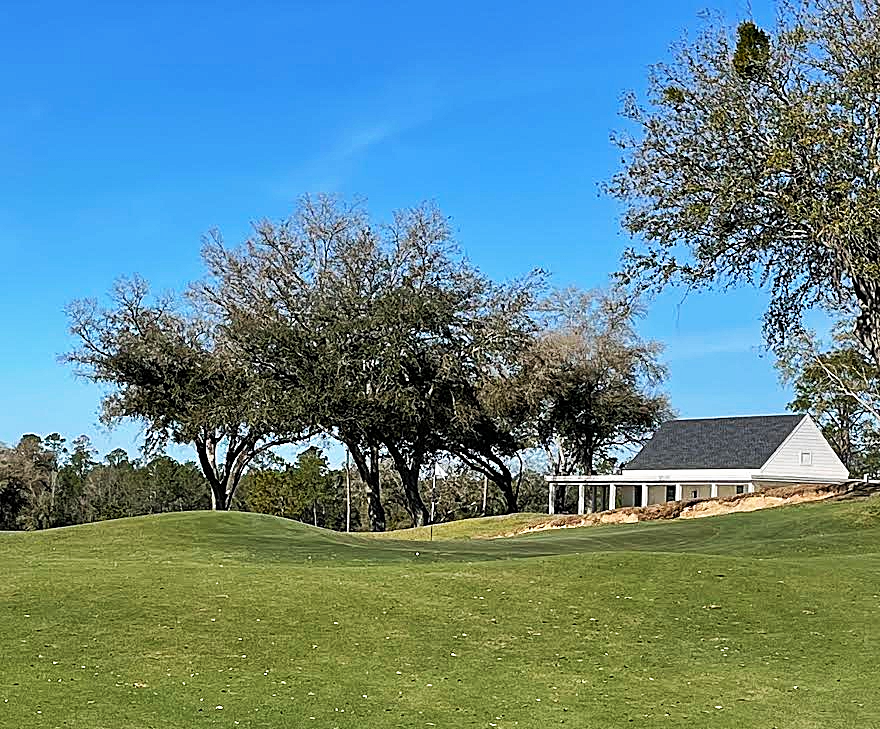
The Karoo Course is nature at its best. Franz created something special here, moving plenty of dirt, but not tricking up the layout. Although the fairways are quite generous, they key to tackling this course are your approach shots. Finding the fairways is just the first step. The Karoo is a second-shot golf course, just like Augusta National or Pinehurst #2 in that regard. If you miss on the wrong side of the green, you’re likely to have 40-50 feet to negotiate, but if you choose the right club and avenue, then you can make birdies.
Now that we’ve established the ins and outs of the course, let’s get into the nitty gritty.
As mentioned, the Karoo and the Roost are walking only golf courses, as is the Wedge, however the Squeeze does allow golf cart usage. FYI, with a doctors note, you can take a golf cart on the other courses.
To say that the practice facilities are outstanding would be an understatement. The double-ended driving range comes complete with TrackMan technology, perfect for before and after your round. In addition, there’s a nearly two acre putting course, which you’ll need to negotiate these expansive greens.